
Rodent Removal in Tampa Heights
Tampa Heights sits just north of downtown, and its pre-war houses carry an oak canopy that reaches over the roofs. Roof rats use those branches, and the contractor we route closes the roofline after trapping. The inspection is free.
- Free inspection, answered 24 hours
- Pre-war roofline sealing
- Licensed contractors only
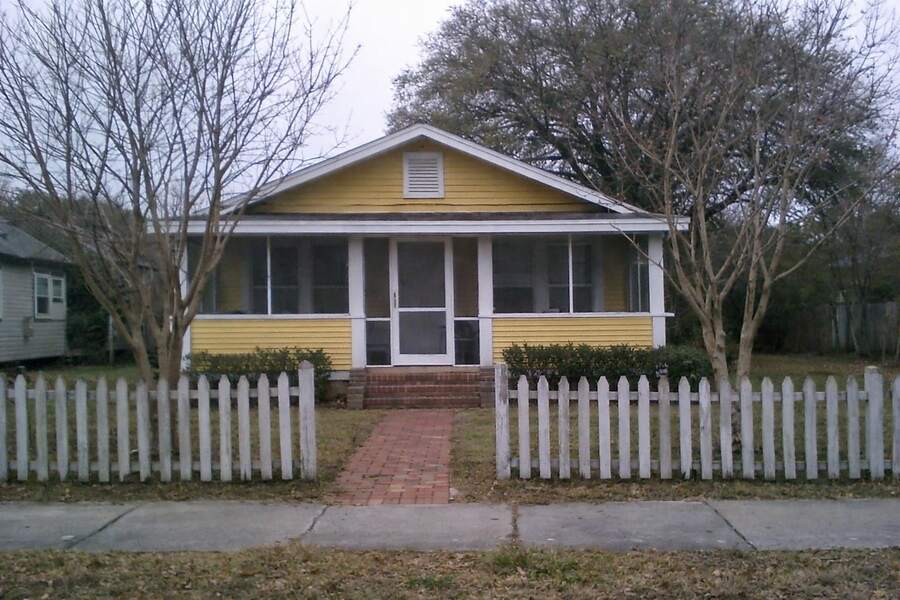
Tampa Heights is old housing under old trees at the edge of downtown
Tampa Heights is a pre-war district directly north of downtown, and the two things that define it for rodent work are its age and its trees. The houses predate the block-and-stucco era, with wood soffits, gable vents and eave details that were never designed against a rat, and the oaks planted along the streets a century ago now reach over the roofs. Local pest firms name it alongside Seminole Heights and Hyde Park as one of the oak canopy neighborhoods where roof rat pressure is heaviest.
The downtown edge changes the inspection slightly. Roof rats dominate attic calls across Tampa, but Norway rats show up at ground level near dumpsters, slabs and the older commercial and waterfront areas, and Tampa Heights sits close enough to that activity that the contractor we route checks the ground floor and the perimeter as well as the roof. A Norway rat burrows and stays low; a roof rat climbs. Which one you have decides where the traps go. Roof rat removal is the usual answer, and the free inspection confirms it.
Branches over the roof are the entry route
A branch that reaches over a Tampa Heights roof is a walkway, and the utility drop that runs from the pole to the house is a second one. UF/IFAS describes roof rats moving along limbs, overhead wires and fence lines to reach a building, and in a district where the canopy closes over the street, a rat can travel a whole block without touching the ground. It arrives at the roof, follows the eave and goes in at the first opening larger than a quarter inch, which UF/IFAS gives as the size that has to be closed for rat-proofing.
The population grows faster than the noise suggests. UF/IFAS gives a roof rat sexual maturity at three to four months, litters of five to eight, and four or five litters a year, so a single pair that came in during the summer rains is a family by the first cool snap. Cutting the canopy back is part of the answer: limbs pruned clear of the roof and the drop line checked where it meets the fascia. The rest is metal at the roofline, because a rat that loses one route finds another within the 150 yards UF/IFAS gives as its range.
Pre-war rooflines need metal, and a plan for what is inside
Sealing a Tampa Heights house means working with the eave details it was built with. Wood soffits shrink and open at the joints, the bays between exposed rafter tails are often closed with nothing more than a board that has cupped, and gable vents carry screens that have rusted or been replaced with plastic. Rodent exclusion closes each of these with steel mesh or sheet metal, cut and trimmed so the eave looks the way it did, and packs every wire and pipe penetration with steel wool under sealant.
What is inside has to be dealt with first. Snap traps go into the attic for at least a week, because roof rats are wary of new objects and rarely take a trap on the first night. Bait is a poor substitute in an old house: UF/IFAS notes that trapping reduces the risk of a poisoned rat dying inside the building, and a rat that dies behind lath and plaster is expensive to reach. Once the attic is quiet, the sealing goes on, and the follow-up visit checks it. A rodent inspection on its own is available if you want the list of openings and the plan before committing to any of the work.
Winter cool snaps fill Tampa Heights attics
Calls from Tampa Heights cluster on the cool snaps between November and February, when rats that have spent the warm months outdoors move into attic insulation. The summer rains from June to September push them toward the house as well, and the fall citrus season from September to March brings them into yards that have fruit. Since Tampa has no real winter, the breeding never pauses; the season only changes when you notice.
Storms open the old rooflines further. After Helene and Milton, Tampa Bay pest firms reported a surge in rodent calls as wind damage created new soffit and roof entry points and displaced rats moved indoors, and the same was reported after Ian and Irma. The sound above the ceiling at 2am, and being told by everyone that it is nothing, is what most Tampa Heights callers describe first. A plan with a price for each part and a date for the follow-up is the answer to it. Angi's Tampa figures put exclusion at $550 to $1,642 and rodent removal at $441 to $1,716 per visit, confirmed at the free inspection. Reach us on the contact page or the phone line, which is answered 24 hours a day.
A representative rafter tail closure on a Tampa Heights eave
The eave of a pre-war Tampa Heights house shows its rafter tails, and the bay between each pair is the opening. A representative closure fits a piece of steel mesh into each bay from below, fastened to the rafters on either side and the top plate behind, then trims a matching board over it so the eave keeps its lines. On a house with twenty bays along a side that is a morning's work, and it is the part of the job most often skipped by a quote that leads with traps. The gable vent above gets hardware cloth behind the louvers on the same visit.
The order an attic job runs in
Five stages, from inspection through to cleanup.
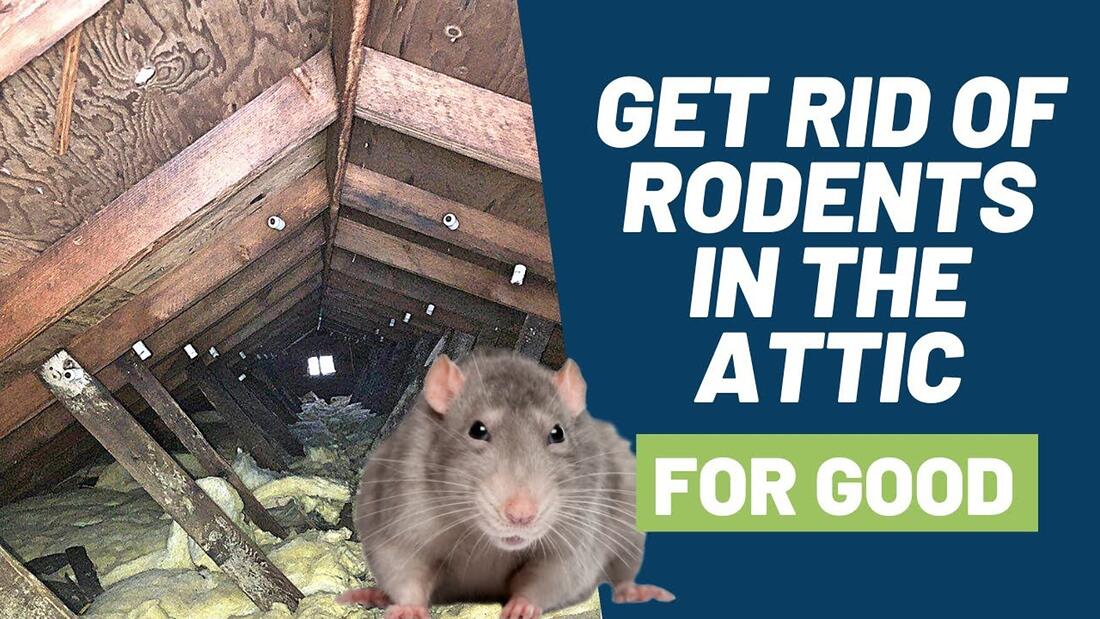
Video: 5 Step Solution to Get Rid of Rodents in Your Attic, from Atticare Construction.
Why Tampa Heights homeowners book through us
Both levels of the house get checked
Close to downtown, the inspection covers the roofline for roof rats and the slab edge, perimeter and any ground-floor gaps for Norway rats, because the two species live and enter differently. The contractor we route identifies which one is present from droppings and rub marks before setting a single trap. Roof rat droppings are a quarter to half an inch long and banana shaped with pointed ends, which UF/IFAS gives as the identifying feature.
UF/IFAS: roof rat droppings a quarter to half an inch, pointed ends
FDACS licensing you can confirm yourself
Trapping rats in a structure for hire requires at minimum an FDACS Limited Commercial Wildlife Management certificate, and applying rodenticide or running a general pest business requires an FDACS structural pest control business license with a certified operator in General Household Pest and Rodent Control. FWC has no role in licensing rat trappers. Every contractor we route holds the credential the job needs, and the FDACS license lookup is the place to confirm it before work starts.
FDACS Limited Commercial Wildlife Management certificate, verifiable online
Itemized quotes against published Tampa bands
A quote for a Tampa Heights house lists trapping, sealing, any cleanup and any monitoring on separate lines, so you can compare each part with Angi's Tampa bands: rodent removal $441 to $1,716 per visit, exclusion $550 to $1,642. Bundled figures with a monthly contract inside them are the thing homeowner forums warn about most, and separating the lines is how you tell whether the sealing is real metalwork or a tube of foam.
Angi Tampa: rodent removal $441 to $1,716 per visit
A typical Tampa Heights call
The situation: A two-story pre-war house a few blocks north of downtown, renovated inside a few years back. The owner hears something in the wall between the kitchen and the back porch in the evenings and has found a chewed corner on a box of cereal in the pantry. The service drop from the pole runs through an oak limb before it reaches the fascia. She has started sleeping with the television on to cover the noise.
What gets done: The inspection walks the ground floor first and finds no burrows at the slab edge or under the porch, which rules out Norway rats. On the roof, the wood soffit below the service drop is gnawed open at a joint, and inside the attic there are droppings along the wall plate above the kitchen. Snap traps go in for a week. The soffit joint and every other open joint along that eave are closed with steel mesh and trimmed, the gable vents are backed with hardware cloth, and the owner arranges with the utility and a tree service to clear the limb from the drop.
How it turns out: Two roof rats in the first three nights and a third on day six. The follow-up visit collects the traps, finds the seals untouched and the wall silent. The cleanup is limited to droppings along the plate, which are removed and the area treated as a separate small line. The television goes off at night again.
Tampa Heights rodent questions
Callers from Tampa Heights ask these questions most.
Old houses near downtown
How do I know if it is a roof rat or a Norway rat?
Where it is and what it leaves behind. A roof rat lives high, in the attic and the canopy, and UF/IFAS describes an adult at 12 to 14 inches with a tail longer than its head and body, and droppings a quarter to half an inch long with pointed ends. A Norway rat burrows at ground level, under slabs and near dumpsters, and is the animal more likely near downtown commercial edges. In Tampa Heights the roof rat is the usual finding, but the inspection checks the ground floor and perimeter to be sure, because the traps go where the animal travels.
Can the wires be part of the problem?
Yes. UF/IFAS lists overhead wires with tree limbs and fence lines as the routes roof rats use, and the service drop that runs from the pole to the fascia lands at the exact spot on the roofline where the soffit is weakest. If a limb touches the drop line, the rat has a route from the tree to the wire to the eave without ever touching the ground. The wire stays, since it is the utility's; the limb gets cleared and the eave where the drop lands gets sealed with metal.
The work
Do I really need the chew-ins repaired now, or can I get away with trapping?
Trapping alone empties the attic for a few weeks and then it refills, because the opening is still there and the canopy keeps delivering rats. Homeowner forums describe that pattern as harvesting rats in traps. Repairing the chew-ins with steel mesh or sheet metal is the exclusion step, and on a Tampa Heights house it is most of the cost and most of the value. Angi puts Tampa exclusion at $550 to $1,642 as a typical band. Ask whoever attends what warranty they offer on the sealing and get the terms in writing.
What is included in the free inspection?
A walk of the roofline from the ground and the ladder, an attic check for droppings, rub marks and disturbed insulation, and a ground-floor and perimeter check for burrows or slab-edge gaps. You get a list of every opening found and a quote with trapping, sealing, any cleanup and follow-up visits on separate lines. HomeGuide prices a standalone inspection nationally at $0 to $175; here it is free, and there is no obligation to go ahead with any of the work.
Still have a question? Call (813) 710-4931 and ask.

Book a free inspection in Tampa Heights
Someone answers the phone 24 hours a day. The contractor we route checks the roofline, the attic and the ground floor and prices trapping, sealing and any cleanup separately.