Post-Storm Rodent Inspection in Tampa, FL
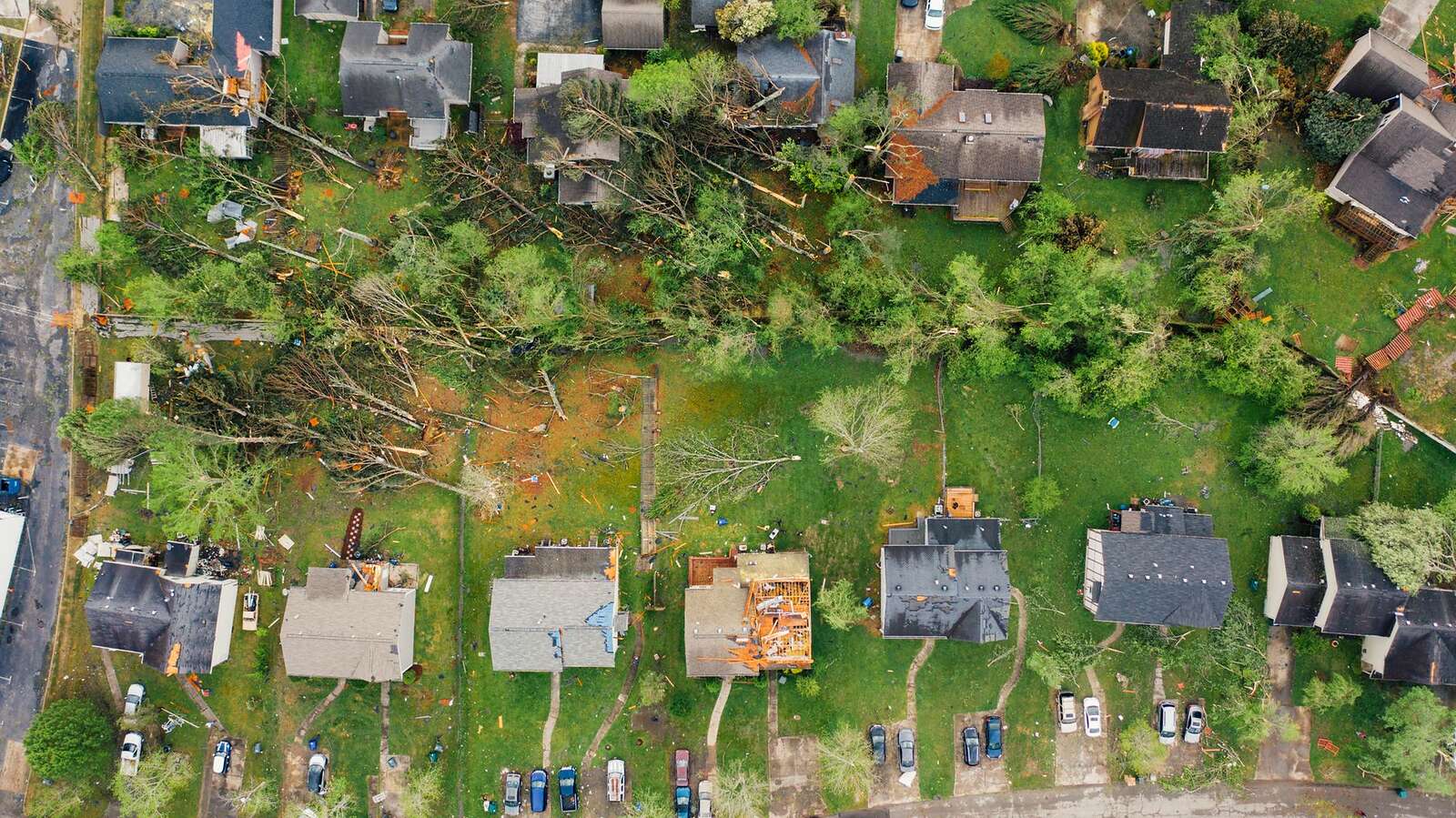
Hurricane season runs June to November, and a storm that lifts tiles, bends soffit panels and floods burrows opens a house to rats within days. A free inspection finds the openings before the winter attic peak.
- Free roofline and debris walk
- Sequenced with your roofer
- Metal seals, FDACS-licensed contractors
What a post-storm rodent inspection includes
A post-storm rodent inspection is a free walk of the roof, eaves, soffits, vents, garage, exterior penetrations, debris piles and ground perimeter of a house after a hurricane or tropical storm, looking for the openings the storm made and the animals the storm moved.
It differs from a standard rodent inspection in what it looks for first. On a normal call the contractor starts with evidence of rats. After a storm the contractor starts with the building, because the entry points are new and the animals may still be on their way. A displaced tile, a soffit panel hanging by one edge or a ridge vent cap blown off is a rat-sized opening whether or not anything has found it yet.
The visit produces a short written list: each opening found, where it is, whether it needs the roofer or the rodent contractor, and any evidence of activity already inside. Anything found is quoted separately, with exclusion on its own line. If the attic already has visitors, the roof rat removal sequence starts from that list.
What Helene and Milton did to Tampa homes
After Helene in September 2024 and Milton in October 2024, Tampa Bay pest firms reported a surge in rodent calls, and they described three causes: storm damage opened roof and soffit entry points, surge and flooding displaced rats from where they had been living, and debris piles became harborage.
The same pattern was reported after Ian in 2022 and Irma in 2017. No reliable count of post-hurricane rodent activity exists, and none is offered here; what the local firms reported is a pattern, and the pattern repeats.
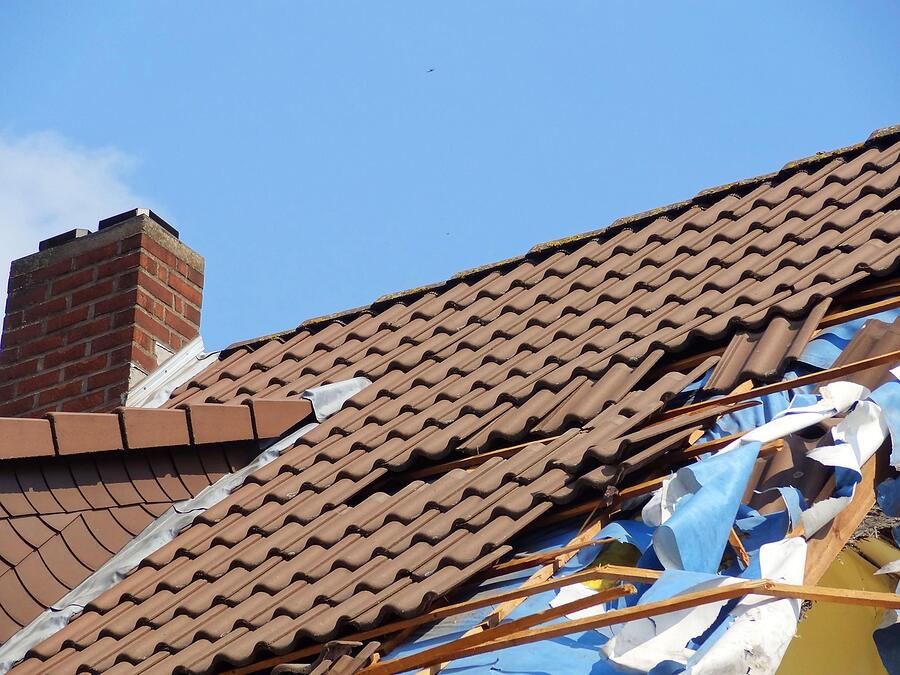
The building side is documented at the federal level. The Department of Energy records that storms break and displace roof tiles, and that one broken tile can cascade into others, which on a Tampa barrel-tile roof means the eave course lifts and the bird stop beneath it goes with it. A wind-lifted soffit panel is the other common opening, and older aluminum soffits in the oak-canopy districts bend under a falling limb and stay bent.
The animal side is displacement. Roof rats living in a tree canopy lose the tree, or the fruit, or the nest in a palm skirt, and go looking for a dry void. Norway rats burrowing near the waterfront and along slab edges get flooded out. Both species head for the nearest opening, and after a storm the nearest opening is often new. Debris piles at the curb, waiting weeks for pickup, give them somewhere to live in the meantime, a few feet from the house.
Why the CDC ties rodent control to flood recovery
The CDC ties increases in leptospirosis cases to hurricanes and floods, names rodents among the reservoirs of the bacteria, and recommends rodent control as one of the prevention measures after a flood.
Leptospirosis spreads through water and soil contaminated by the urine of infected animals, and floodwater carries it. A yard that stood under surge, a garage that took water, and a debris pile that rats have been living in are the places contact happens during cleanup. The CDC's broader statement applies too: rodents carry many diseases, spread directly through contact with urine, droppings, saliva or a bite, and indirectly through fleas, ticks and mites that fed on an infected rodent.
Hantavirus comes up in post-storm searches and deserves a plain answer. Florida's identified reservoir is the native cotton rat, an outdoor field species, and most US cases are in the western states. Respiratory protection during droppings cleanup is still correct on general contamination grounds, and that is the reason to wear it.
The practical reading for a Tampa homeowner is that sealing the house and clearing the debris harborage after a storm is a health measure as well as a building measure, and that gloves and a respirator belong in the cleanup kit.
What to walk around and check after a storm
Once it is safe to be outside, a homeowner can walk the house and check six things before any contractor arrives: roof tiles, soffit panels, vent screens, debris piles, the garage door seal, and the ground for flood-displaced burrows.
- Roof tiles. From the ground, look along each eave for a tile that has slid, cracked or gone. A gap in the first course means the bird stop beneath it is exposed or missing, and the void runs the length of the eave.
- Soffit panels. Look for aluminum or vinyl panels that hang, buckle or have pulled out of the F-channel. A bent panel leaves a gap at the wall line that leads straight into the attic.
- Vent screens. Gable vents, off-ridge vents and ridge caps. A gable screen torn by wind or a ridge cap lifted by uplift is an open door. Plastic and light-wire screens fail first.
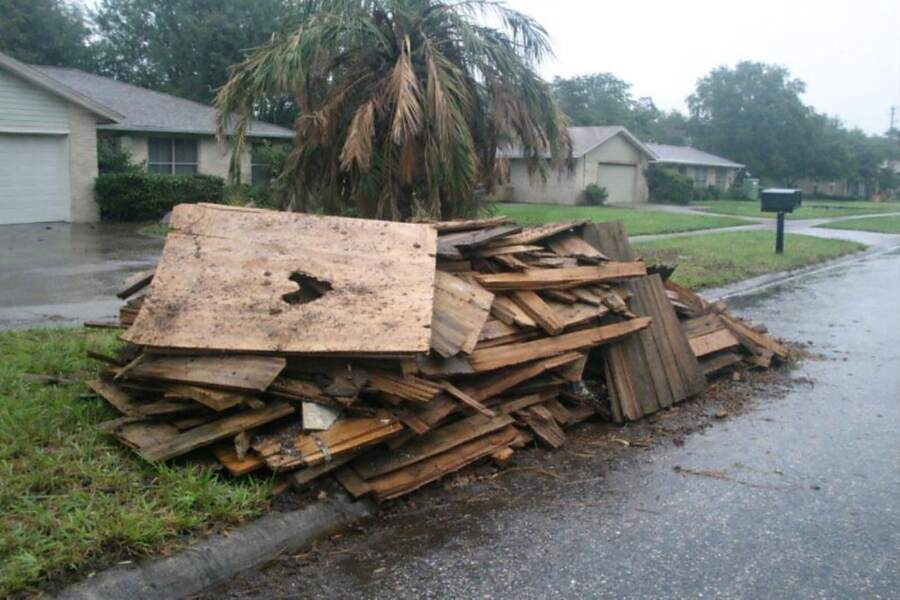
- Debris piles. Limbs, fronds, fence panels and wet drywall stacked at the curb or beside the house. A pile that sits for weeks is harborage, and a pile against the wall is harborage with a ladder.
- Garage door seal. Water and wind push the bottom seal out of its track. A gap at either corner of a garage door is the most common ground-level entry on a slab house.
- Flood-displaced burrows. Fresh holes two or three inches across in soft ground near the foundation, under a shed or beside an AC pad, especially near the water, are Norway rats that moved when the surge came.
Anything found goes on the list for the free inspection. The homeowner should photograph it for the insurance file and leave the sealing to the contractor, because a hole closed with foam or a rag on the day after a storm will be reopened by the first rat that finds it. The UF/IFAS rat-proofing standard is a quarter inch, closed in a material a rat cannot chew.
Sequencing rodent work with roof repairs
The rodent inspection comes before the roofer, the sealing happens alongside the roof repair, and the trapping runs from the day the house is closed up, so that the roof does not get repaired over an occupied attic.
Roofers after a storm are booked for months, and a tarp can be on a house for a long time. A tarp keeps rain out and does nothing about rats, which come in under its edge at the eave. So the order that works is this. The rodent contractor inspects first and lists the openings. The ones that are rodent-only, such as a torn gable screen, a bent soffit return or a garage seal, get sealed in metal straight away. The ones that belong to the roofer, such as displaced tiles and missing ridge caps, are flagged, and the contractor tells the roofer what to reinstate at the eave: a code-approved metal bird stop, typically 26 gauge galvanized or aluminum, sometimes ventilated with weep holes, under the first course. The Department of Energy lists installing bird stopping among its recommended measures for tile roofs.
Bird stop compared with foam
A metal bird stop is a building component; foam under a tile eave is a temporary plug that rats chew and that traps water against the deck.
The distinction matters most after a storm, because the roofer's crew is moving fast and foam is fast. A homeowner should ask the roofer, in writing, whether the eave closure being reinstated is metal. If the answer is foam, the rodent contractor can supply or specify the part.
Trapping compared with bait after a storm
Trapping is the method inside a storm-damaged house, because a house with a roof open for weeks may already have animals in the attic, and bait would leave them to die there.
The EPA describes most rodenticides as anticoagulants with death four days to two weeks after feeding begins, and UF/IFAS notes trapping reduces the risk of a poisoned rat dying inside a building. Traps go in on the sealing visit and stay at least a week, since roof rats are wary of new objects. Where the roof cannot be closed for weeks, the contractor seals what can be sealed, traps inside, and returns when the roofer is done to close the rest.
Is it safe to do exclusion before trapping after a storm?
Sealing and trapping happen together on the same visit, which is the safe version of both: openings are closed to stop new arrivals, and traps go in the same day for anything already inside.
The corpus worry behind this question is real. Seal a house with a rat in the attic and the rat chews a new way out, or dies in a wall. After a storm the risk is higher, because a roof that has been open for two weeks may have taken in a family, and the homeowner may have heard nothing yet over the generator. The answer is to close every opening the contractor can reach on day one, set traps across the attic on the same ladder, and leave them at least a week. A rat that was inside is caught; a rat that was outside stays outside. Where an opening has to wait for the roofer, that one stays on the list and the traps stay down until it is closed.
The homeowner's part is to stop the DIY plugging. A rag in a soffit gap or a squirt of foam under a tile the day after a storm makes the situation worse, by sealing whatever is inside without a trap in place.
How long does it take to get rid of rats that came in after a storm?
A house that was sealed within days of the storm and had one or two arrivals is usually clear within two weeks; a house that sat open under a tarp for a month and took in a breeding pair is a one-to-two-month job.
HomeGuide puts trapping a small number of animals at two to three days and a severe infestation at one to two months. The storm variable is time under an open roof. A roof rat reaches sexual maturity at three to four months, gestation is 21 to 23 days and a litter is five to eight, per UF/IFAS, so a pair that moved in under a tarp in October is a colony by December. The earlier the inspection, the shorter the job.
Nobody needs telling that this part is hard. A family living in a storm-damaged house, waiting on an adjuster and a roofer, and now hearing something in the ceiling at night, is running on very little sleep. The sealing is the thing that makes the noise stop, and it is the thing that can be done first.
What post-storm rodent work costs in Tampa
The inspection is free, and the sealing, trapping and any cleanup that follow are quoted as separate lines within the bands below, confirmed at the inspection.
| Item | Typical band | Source |
|---|---|---|
| Post-storm inspection | Free; standalone inspection band $0 to $175 | HomeGuide 2026, national |
| Exclusion sealing | $550 to $1,642 | Angi, Tampa |
| Trapping and removal | $441 to $1,716 per visit typical | Angi, Tampa |
| Attic cleanup and decontamination | $600 to $2,500 | HomeGuide 2026, national |
| Insulation removal, if wet or contaminated | $600 to $1,200; replacement adds $1,000 to $3,000 | Angi, Tampa |
What moves the number after a storm is the number of new openings and whether the attic took water. A house with a torn gable screen and a garage seal is the bottom of the exclusion band. A tile roof with the eave course lifted on two sides and a soffit down along the back is the top. Wet insulation is its own line: the Department of Energy states wet insulation performs poorly and compressed insulation does not deliver its rated R-value, so an attic that took rain and rat traffic through an open roof is often an insulation replacement job as well. The homeowner should photograph everything before any work, because the roof and the insulation may be an insurance matter and the report describes what was found without taking a view on coverage.
Timing: hurricane season, citrus season and the winter attic peak
Tampa's hurricane season runs June to November, attic calls peak from November to February when the first cool snaps arrive, and citrus season runs September to March, so a storm opening left through the fall is found by rats at exactly the time they are looking for a warm void.
The three calendars overlap in a way that punishes delay. A September or October storm opens the roof. Roof rats are already active outdoors from May to October and are being drawn to ripening dooryard citrus from September; a hollowed orange on the ground is the tell. Then the first November cool snap sends them up into the attic, and the opening the storm made is the way in. A homeowner who has the roofline checked in the weeks after the storm closes that window. One who waits for the roofer in January is sealing an occupied attic.
The neighborhoods with the most to check are the oak-canopy districts, where a storm brings limbs down onto rooflines: Seminole Heights, Tampa Heights, Hyde Park and South Tampa down to Ballast Point, where live oaks with Spanish moss sit on the roofs. The newer tile-roofed subdivisions in New Tampa, Westchase and Riverview have less canopy and more tile, so the check there is the eave course and the ridge caps. Waterfront streets that took surge get the ground-level walk for displaced Norway rat burrows.
What to check on the contractor after a storm
Confirm the FDACS license through the state lookup, get an itemized quote that separates rodent sealing from roof repair, ask about warranty terms on the sealing, and confirm the follow-up visit after the roofer is done.
Storms bring out-of-area crews, and a rodent job is easy to sell to a stressed household. Trapping rats in, on or under a structure for hire in Florida requires at minimum an FDACS Limited Commercial Wildlife Management certificate, and applying rodenticide requires an FDACS Commercial Structural Pest Control business license with a certified operator in General Household Pest and Rodent Control. Every contractor we route holds the FDACS credential the job needs, and the homeowner should check the number through the FDACS lookup before work starts, especially in the weeks after a storm.
- Itemized quote. Inspection, sealing, trapping and cleanup on separate lines, with roof work clearly left to the roofer and the eave closure specified as metal.
- Warranty terms. Ask what the contractor's warranty on the sealing covers, how long it runs and whether it renews. Ask how it treats openings that the roofer later reinstates.
- Follow-up visits. Ask how many are included, and confirm a return visit once the roof is repaired to close what had to wait.
- Photographs. Every opening and every seal photographed, for the homeowner's insurance file as much as for the report.
How a job is arranged is on the about page, and the line can be reached through the contact page. Someone answers 24 hours a day, including during and after a storm.
Services that usually go with this one
Most jobs in Tampa run as a sequence, and these are the pages that describe the steps around this one.
- Rodent Exclusion: Closing the roofline: soffit returns, vents, tile eaves and penetrations, to the quarter-inch standard.
- Rodent Inspection: A free walk of the roofline, attic and exterior that sets the sequence for the job.
- Roof Rat Removal: Trapping out the attic rat that dominates Tampa, sequenced with sealing.
Questions about how the pieces fit together are answered on the about page, or by phone at any hour.
How a post-storm rodent inspection runs
The sequence puts the building first, seals what can be sealed on day one, and returns when the roofer is done.
-
Free walk of the roofline and ground
The contractor checks tiles, eaves, soffits, vents, the garage seal, debris piles and the ground for burrows, and looks in the attic for anything already inside. Every opening is photographed and listed.
-
Seal what is rodent-only
Torn vent screens, bent soffit returns, garage seals and utility penetrations are closed in steel mesh, sheet metal or mortar on the first visit. Openings that belong to the roofer are flagged with the part to reinstate.
-
Trap inside from day one
Traps go across the attic on the sealing visit and stay at least a week, so anything that came in under the open roof is caught instead of sealed in.
-
Coordinate the eave with the roofer
The contractor specifies a metal bird stop under the first tile course and any ridge cap screening, so the roof repair closes the rodent openings as well as the weather ones.
-
Return and re-check
After the roof is repaired, the contractor closes what had to wait, checks every seal for fresh gnawing, pulls the traps and confirms the attic is clear.
What to expect
The visit runs in the same order on every post-storm rodent inspection job, so you know what is coming before the truck arrives.
- Written list of every opening, by trade
- Debris harborage flagged for removal
- Metal seals, foam is refused
- Traps down at least seven days
- Return visit after the roofer
Why Tampa homeowners book the post-storm check
The building is checked before the animals arrive
A standard rodent call starts with evidence. A post-storm call starts with the openings a storm makes, because the animals are still on their way. The contractor walks tiles, eaves, soffits, vents, the garage seal and the ground, and lists each opening by the trade that closes it. That list gets the rodent-only openings sealed in metal on day one and tells the roofer what to reinstate at the eave.
Department of Energy: storms break and displace roof tiles, and one broken tile can cascade into others
A health measure the CDC names
The CDC ties increases in leptospirosis to hurricanes and floods, names rodents among the reservoirs, and lists rodent control among post-flood prevention measures. Sealing the house and clearing the debris harborage in the weeks after a storm is on that list. The contractor also says plainly what the risk is and what it is not, including that Florida's hantavirus reservoir is an outdoor field species.
CDC guidance on leptospirosis after hurricanes and floods, with rodent control among the recommended prevention measures
FDACS-licensed, when storm crews are not
The weeks after a hurricane bring unlicensed crews to Tampa driveways. Every contractor we route holds the FDACS credential the job needs, at minimum the Limited Commercial Wildlife Management certificate for trapping and the Commercial Structural Pest Control business license with a certified operator for any rodenticide, and the homeowner is told to check the number through the FDACS lookup before work starts.
FDACS Limited Commercial Wildlife Management certificate, verifiable through the FDACS lookup
What Reddit Says About Post-Storm Rodent Inspections in Tampa
The Florida threads tie rodent problems to hurricane aftermath directly, with one homeowner dating an infestation to the weeks after Irma, and the general vetting advice in the corpus applies with more force when a household is already dealing with a roofer and an adjuster. Get more than one bid for the same written scope. Insist the quote is itemized, with sealing, trapping and cleanup as separate lines. Prefer a local operator who does the sealing work over a brand that sets traps and leaves, and ask that question outright.
The red flags people warn each other about are the ones a stressed household is most exposed to after a storm: a poison-only plan with no sealing, the line that poison makes rats go outside to die, a quote that hides a monthly monitoring contract in the removal price, and companies that keep returning for months with nothing changing. Trapping with no sealing is described as harvesting rodents in traps, and a house with a tarp on it is the clearest case of that in the corpus.
The questions they recommend asking are what exactly is included, whether the exclusion is warrantied and whether the warranty renews, whether cleanup is included, how many follow-up visits are in the price, and what happens if the rats come back. Entry-point education lands well in the threads, and the Florida ones name barrel-tile eaves, soffit gaps and overhanging limbs as the ways in, which are the same three things a storm damages.
An inspection that lists every opening by trade, seals the rodent ones in metal and states its follow-up visit is the version of this work the threads would tell a homeowner to accept.
A typical post-storm call in Tampa
The situation: A family in a tile-roofed house in a newer subdivision comes back after a storm to find a row of tiles lifted along the back eave, a soffit panel hanging under the lanai and a debris pile of fronds and fence panels at the curb. The roofer has tarped the roof and cannot return for weeks. Two nights later something runs the length of the ceiling over the main bedroom.
What gets done: The contractor we route walks the roofline and finds the eave course lifted with the bird stop gone along a twelve-foot run, the soffit panel out of its channel, a torn gable screen on the side away from the damage, and a gap at one corner of the garage door seal. In the attic there are fresh droppings in one corner. The gable screen is replaced in steel mesh, the soffit panel is refitted and its return closed in sheet metal, the garage seal is replaced, and traps go across the attic. The lifted eave is flagged for the roofer with a written note specifying a metal bird stop under the first course. The debris pile is flagged for pickup and moved away from the wall.
How it turns out: The traps take two animals in the first week and nothing in the second. The roofer reinstates the tiles and the metal eave closure, the contractor returns to check the run, finds it closed to the quarter-inch standard, and pulls the traps. The family gets a list of the four openings, the photographs for their claim file, and a note to have the attic insulation checked where rain came through the lifted tiles.
Post-storm rodent questions
What Tampa homeowners ask in the weeks after a hurricane.
After the storm
My roof is tarped and the roofer cannot come for a month. Should I wait?
No. A tarp keeps rain out and lets rats in under its edge, and a month under a tarp in October runs into the November attic peak. The contractor seals every opening that is rodent-only on the first visit, sets traps across the attic the same day, flags the tile and ridge openings for the roofer with the metal part to reinstate, and returns once the roof is done to close what had to wait. The trapping runs from day one so nothing that came in under the tarp is sealed in later.
Is the debris pile at the curb really a rodent problem?
Yes, while it sits. Tampa Bay pest firms reported after Helene and Milton that debris piles became harborage, and a pile of fronds, limbs and wet drywall against the house is a nest site with a ladder to the roof. Move it off the wall if it cannot be picked up, keep it away from the AC pad and the garage door, and expect the contractor to walk it. Gloves and a respirator during cleanup are worth wearing on general contamination grounds, given what floodwater and rodent urine carry.
Should I worry about disease after flooding?
The CDC ties increases in leptospirosis to hurricanes and floods, names rodents among the reservoirs, and recommends rodent control as a post-flood prevention measure, so sealing the house and clearing harborage is a health step. Hantavirus is a different matter: Florida's reservoir is the native cotton rat, an outdoor field species, and most US cases are western. Wear a respirator and gloves for droppings cleanup on general contamination grounds, and treat floodwater in the yard and garage as something to keep off cuts and out of the mouth.
Sealing and repairs
Can my roofer just foam the eave when the tiles go back on?
The eave closure should be a metal bird stop, and a homeowner should ask the roofer in writing which it will be. The gap under the first course of barrel tile is a named building component with a code-approved metal part to fill it, typically 26 gauge galvanized or aluminum, sometimes with weep holes, and the Department of Energy lists bird stopping among its recommended measures for tile roofs. Foam under a tile eave is chewed by rats and holds water against the deck. The rodent contractor can specify the part for the roofer.
Will insurance cover the rodent work?
That is the insurer's decision and depends on the policy, so the answer here is about the file. The contractor photographs every opening and every seal and writes a list of what was found, which describes the storm damage and the rodent entry without taking a view on coverage. The homeowner should photograph the roof, the soffits and any wet insulation before any work, and keep the itemized quote, so the roof repair, the rodent sealing and the insulation are each documented as their own item for the adjuster.
Still have a question? Call (813) 710-4931 and ask.
Book a free post-storm inspection
Call (813) 710-4931 once it is safe to be outside, and the roofline check gets arranged ahead of the roofer. Someone answers 24 hours a day, during and after a storm.