Rodent Exclusion in Tampa, FL
Exclusion is the sealing work that ends a rat problem in Tampa: every opening a quarter inch or larger at the roofline closed with steel, sheet metal and proper tile eave closures. Licensed contractors handle every job we route.
- Quarter-inch sealing standard
- Steel and metal closures over foam
- Free roofline inspection first
What rodent exclusion in Tampa includes
Rodent exclusion in Tampa is the closing of every rodent-sized opening in the building shell, measured against a quarter inch and done with materials a rat cannot chew through, followed by a written record of what was sealed and where. On a slab-built Tampa house with a vented attic, that is almost entirely a roofline job.
The scope on a typical house runs from the eave up. Whoever attends works from a ladder and inside the attic, closes each opening from the outside where possible, and photographs or lists each repair so the homeowner can see it and a second contractor could check it. Trapping is arranged alongside so that whatever is already inside comes out instead of chewing a new exit; the roof rat removal page covers that half of the program.
- Roofline and attic inspection first, at no charge (see rodent inspection)
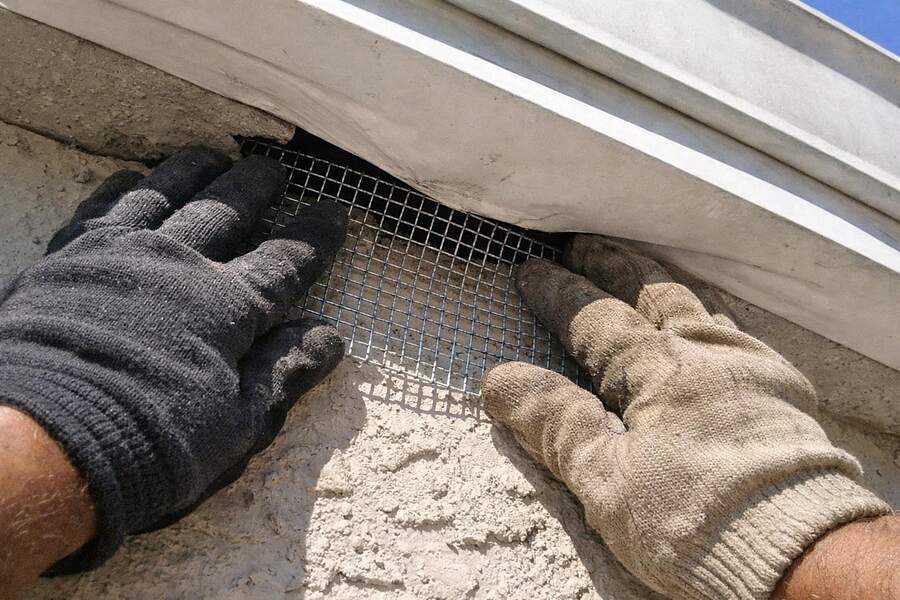
- Galvanized quarter-inch hardware cloth fitted behind or over soffit returns, gable vents, off-ridge vents and ridge vent ends
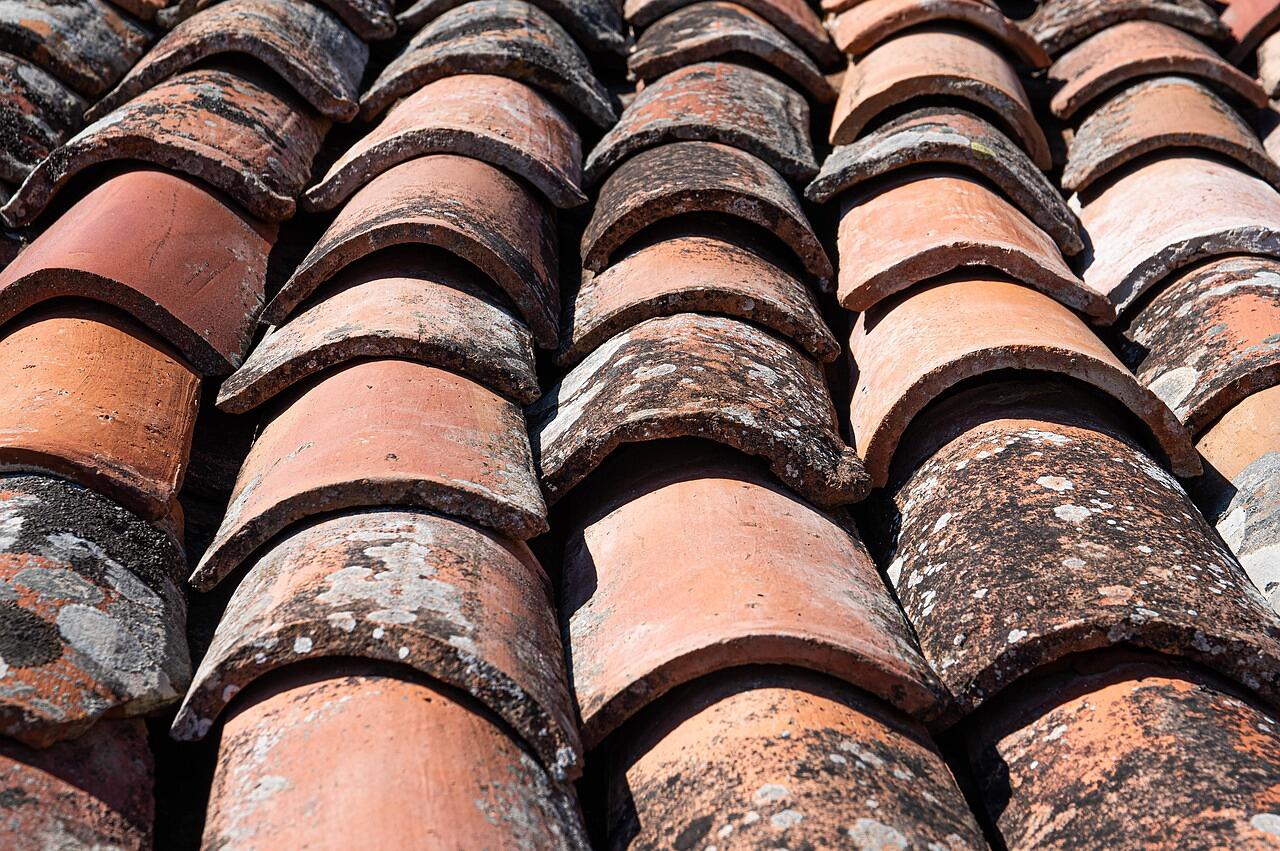
- Manufactured metal bird stop or eave closure fitted under the first course of barrel or concrete tile
- Sheet-metal patches over chewed fascia, soffit corners and the gap over a garage-to-attic panel
- Mortar, metal collars or hardware cloth at the AC line set, cable entry, electrical mast and plumbing vent penetrations
- A new bottom seal or side seal on the garage door where daylight shows
- A written record of every closure, with the material used
A house that has been entered feels different afterward, and most people who call about sealing have already had weeks of broken sleep. The sealing is the part of the job that gives the house back.
Work out roughly what this job costs in Tampa
Six questions, using the published Tampa and national cost bands further down the page. The range is wide on purpose: the roofline is the biggest variable and nobody can price one from a form.
Bands come from Angi's Tampa cost pages and HomeGuide's 2026 national guides. Every figure is confirmed at the free inspection.
Where rats get into a vented Florida attic
Rats enter a Tampa attic at the roofline, because that is where a vented attic on a slab foundation has its openings and because the roof rat arrives from the trees. UF/IFAS describes the roof rat as a climber that travels along limbs, wires and palm trunks, so the search for entry points starts at the eave and works up to the ridge.
| Entry point | Why it opens | How it is closed |
|---|---|---|
| Soffit return | The corner where a soffit meets a wall or a roof slope; aluminum panels bend and the return is often never closed at construction | Quarter-inch galvanized hardware cloth cut to the return and fastened to framing, or a sheet-metal closure |
| Gable vent | Plastic or light-wire screens chew through and rust out | Hardware cloth fitted inside the louver, fastened at the frame |
| Ridge vent and off-ridge vent | Plastic mesh under the cap is chewed; the open ends at the gable are unfinished | Hardware cloth at the ends and under the cap, metal end caps |
| Tile eave course | The gap under the first row of barrel or concrete tile runs the length of the eave; a missing, displaced or corroded bird stop leaves it open | A manufactured metal bird stop or eave closure fitted under the first course |
| Utility penetrations | The AC line set, cable, electrical mast and plumbing vents pass through stucco or soffit with an oversized hole | Mortar or a metal collar packed around the pipe, hardware cloth behind stucco patches |
| Garage door seal | Bottom and side seals shrink and tear; daylight at the corners is a rat door | New seal and threshold, and the garage-to-attic panel gap closed above |
The quarter inch is the standard for the whole list. UF/IFAS gives a quarter inch as the opening a mouse needs and half an inch for a rat, with a quarter inch as the rat-proofing figure, so anything that admits a pencil is on the list.
The bird stop on a Tampa tile roof
The gap under the first course of barrel or concrete tile has a name, a manufactured part that closes it, and a place in federal roofing guidance, and a missing bird stop is the largest single opening on many Tampa tile roofs. The part is called a bird stop or eave closure. It is a code-approved metal profile, typically 26 gauge galvanized steel or aluminum, sometimes ventilated with weep holes so the eave can still breathe, and it sits under the first row of tile along the full length of the eave.
Bird stopping is on the Department of Energy list of recommended measures for clay and concrete tile roofs. When it is absent, corroded or displaced by a storm, the void it was meant to close runs the entire eave and is far larger than a rat needs. That is why a tile roof in Westchase, New Tampa or a South Tampa waterfront street can have low tree pressure and still take rats every cool snap.
The comparison that matters at quote time is a named, code-approved component against a blob of expanding foam. Foam in a tile eave gets chewed, crumbles in the sun and blocks the ventilation the eave was designed for. A metal closure does none of that. Ask a contractor quoting a tile roof which of the two is on the invoice.
Steel mesh, sheet metal and mortar against expanding foam
Material choice comes down to two tests: a rat cannot chew through it, and weather cannot work it loose. Galvanized hardware cloth, sheet metal, a manufactured bird stop, and mortar or a metal collar where pipes pass through all pass both. Expanding foam by itself fails the first one, and any quote resting on foam and steel wool is a quote for doing the job twice.
| Material | Where it belongs | How it holds up |
|---|---|---|
| Quarter-inch galvanized hardware cloth | Soffit returns, gable and ridge vents, behind stucco patches, over larger voids | Chew-proof at the quarter-inch mesh; galvanized coating resists the humidity; keeps the vent breathing |
| Sheet metal (galvanized or aluminum) | Chewed fascia and soffit corners, drip-edge gaps, end caps on ridge vents | Chew-proof and rigid; fastened to framing it does not lift in wind |
| Metal bird stop or eave closure | Under the first course of barrel or concrete tile | The purpose-made part for the gap; ventilated versions keep the eave airflow |
| Mortar or metal collar | Around the AC line set, cable, mast and plumbing penetrations in block and stucco | Permanent; matches the wall and does not shrink |
| Expanding foam | Only as a backing behind metal, to stop air movement | Chewed through in a night when exposed; breaks down in sun; hides the hole from the next inspector |
| Steel wool on its own | Nowhere on an exterior job | Rusts to nothing in Tampa humidity within a season |
Copper mesh and stainless mesh do the same job as galvanized hardware cloth at a higher price and are sometimes chosen near salt air. The material is less important than the fastening: a screen laid over a hole and glued is still a hole, and a screen screwed to framing is a closure.
Is it safe to do exclusion before trapping?
Exclusion before trapping is safe when the two are run as one program, with traps set inside on the day the roofline is closed and checked until the attic goes quiet. What is unsafe is sealing a house and walking away, because a rat locked in a Tampa attic with the roofline closed will chew a new route, and the new route is often down into a wall, a soffit box in the kitchen or the garage ceiling.
The professional sequence used on the jobs we route has three parts. The roofline is closed on the first visit, or all but one known main entry is closed and a one-way door is fitted there. Snap traps go on the dropping runs the same day and stay at least a week, because UF/IFAS notes that roof rats are wary of new objects. A return visit confirms no fresh droppings and no new gnawing and then finishes the last closure.
The other order, trapping first and sealing later, is what leaves people trapping for months. The roof rat removal page lays out the whole sequence, and the reasons poison is a poor substitute for either step.
What keeps rats away permanently?
A sealed roofline keeps rats out of a Tampa house for as long as the closures stay in place, and nothing sold in a bottle or a plug-in socket does the same. Repellents and ultrasonic devices are not a substitute for a closed building. Cats are outmatched by an animal that reaches the roof without touching the ground.
Three things extend the life of an exclusion job here. Prune oak limbs and palm fronds back off the roof, because UF/IFAS describes limbs, wires and palm trunks as the roof rat's routes and the species travels around 150 yards from its den. Pick up fallen citrus from September through March, since dooryard fruit is what makes a hidden population visible and keeps it fed. Walk the roofline after every named storm, because wind lifts soffit panels, displaces tile and breaks bird stops; the CDC ties leptospirosis increases to hurricanes and floods and recommends rodent control as post-flood prevention, and a post-storm rodent inspection exists for exactly that check.
The rest is maintenance: a garage seal that gets replaced when it tears, a gable screen that gets checked once a year, and a call the first time something is heard overhead instead of the fifth.
What rodent exclusion costs in Tampa
Full-home exclusion in Tampa runs $550 to $1,642 in Angi's Tampa cost data, against a national band of $500 to $2,500 in HomeGuide's 2026 figures, and the free inspection produces the itemized number for a specific roofline. The bands below are typical-job ranges to budget against.
| Line item | Tampa (Angi) | National (HomeGuide 2026) |
|---|---|---|
| Full-home exclusion sealing | $550 to $1,642 | $500 to $2,500 |
| Trapping and removal alongside | $441 to $1,716 per visit, average $1,078 | $250 to $1,200 |
| Standalone inspection | Free here | $0 to $175 |
| Attic cleanup after sealing | Insulation removal $600 to $1,200; replacement adds $1,000 to $3,000 | $600 to $2,500 |
What moves an exclusion quote inside the band is mostly the roof. A single-story shingle ranch with four gable and soffit openings is the bottom of the range; a two-story tile roof with a missing bird stop along three eaves, plastic ridge mesh and six penetrations is the top. Oak canopy adds ladder time and a pruning recommendation. Stucco patching over hardware cloth adds a line. National guides also price crawl spaces and basements that Tampa's slab-built houses do not have, which is one reason a Tampa quote can sit below the national spread. Ask whether the number includes a return visit and whether any monthly plan is bundled into it.
Exclusion on Tampa housing stock
Exclusion in Tampa is shaped by two kinds of houses: pre-war and mid-century wood-framed homes under live oaks, and newer block-and-stucco homes under tile, and each fails at the roofline in its own way. Both sit on slabs with vented attics, so the work is the same in principle and different in the details.
Bungalows under the canopy
In Seminole Heights, Tampa Heights, Hyde Park and South Tampa, the Craftsman bungalows and cracker houses have wood soffits, older gable louvers and eaves that the oaks lean on. The Seminole Heights historic district dates from 1912 to 1928 and roughly 30 percent of Old Seminole Heights homes predate 1950. The typical closures there are hardware cloth at soffit returns and gable louvers, sheet metal over chewed fascia, and a pruning list for the limbs on the roof. The Seminole Heights and Hyde Park pages go into the housing.
Tile over block in the newer subdivisions
New Tampa, Westchase and Riverview run to concrete or barrel tile over block and stucco with off-ridge vents and long eaves. Canopy pressure is lower and the entries are the tile eave gap, the ridge and off-ridge vent mesh, and the line-set penetration on the AC wall. The bird stop is the closure that decides most of those jobs.
Storm damage as an entry point
After Helene and Milton in 2024, and Ian and Irma before them, Tampa Bay pest firms reported rodent calls surging as wind opened roofs and soffits and displaced animals moved in. Broken and displaced roof tiles after a storm are documented by the Department of Energy. An exclusion job done before hurricane season is worth a roofline walk after it.
Licensing for the sealing work
Sealing on its own is building work, and the trapping that runs alongside it is regulated. Trapping rats in, on or under a structure for hire requires at minimum an FDACS Limited Commercial Wildlife Management certificate, and rodenticide use requires an FDACS pest control business license with a certified operator. Rat and mouse trappers are outside FWC licensing altogether. Every contractor we route holds the FDACS credential the job needs, and the license can be confirmed through the FDACS lookup before work starts.
What to ask about the exclusion quote and its warranty
An exclusion quote should name the openings, name the materials, state the warranty term in writing and say how many return visits are included, and a contractor who cannot supply those four things is quoting foam. Ask before the ladder goes up.
- Which openings were found, and is each one on the quote with a material beside it?
- Is the sealing warrantied, for how long, and does the warranty renew or end after one term?
- What happens if rats come back inside the warranty period: a free reseal, a free trapping visit, or neither?
- Does the quote include the trapping and a return visit, or are those separate lines?
- Is any monthly monitoring plan folded into the price?
- What is the FDACS license number for the trapping side of the job?
Warranty terms vary from contractor to contractor, and the length matters less than what the warranty covers and whether it is written down. Get the same answers from every bid, and use the contact page or the about page if you want to know what the routed contractors are expected to put in writing before booking.
Services that usually go with this one
Most jobs in Tampa run as a sequence, and these are the pages that describe the steps around this one.
- Roof Rat Removal: Trapping out the attic rat that dominates Tampa, sequenced with sealing.
- Rodent Inspection: A free walk of the roofline, attic and exterior that sets the sequence for the job.
- Post-Storm Rodent Inspection: Checking the roofline and harborage after a hurricane, before the winter attic peak.
Questions about how the pieces fit together are answered on the about page, or by phone at any hour.
Which mesh actually lasts
Three materials compared at the same gap.
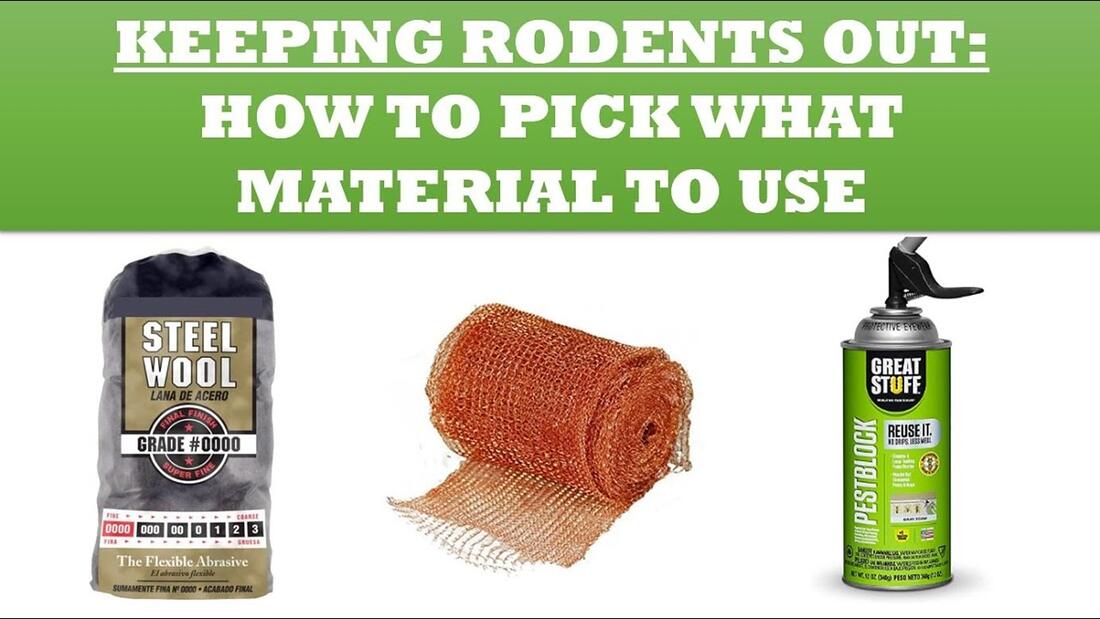
Video: Steel wool vs copper mesh vs green mesh, from If I Can Do It You Can Too.
How an exclusion job runs in Tampa
The roofline is closed first, and the trapping and verification are built around that closure.
-
Roofline and attic inspection
Whoever attends works the eave from a ladder, checks every vent and penetration, then reads the attic for dropping runs and rub marks that show which openings are in use. The findings and the quote come in separate lines.
-
Sealing from the eave up
Soffit returns, gable and ridge vents, tile eave courses, penetrations and the garage seal are closed with hardware cloth, sheet metal, bird stop and mortar, measured against a quarter inch.
-
Trapping inside the same day
Snap traps go on the marked runs as the roofline closes, so nothing inside has a reason to chew a new exit. They stay at least a week.
-
Return visit and final closure
Fresh droppings, gnawing and sound are checked; any missed opening is sealed and any one-way door is removed and closed.
-
Written record
What you keep at the end is a closure list naming the material at each point. That document is what any warranty is written against, and what a buyer's inspector or an insurer will want to see.
What to expect
The visit runs in the same order on every rodent exclusion job, so you know what is coming before the truck arrives.
- A ladder walk along every eave
- Each opening measured and photographed
- Metal closures screwed to framing
- Traps set as the roofline closes
- A written closure list at the end
Why Tampa homeowners route exclusion work through us
Metal closures, measured to a quarter inch
The contractor we route seals with galvanized hardware cloth, sheet metal, manufactured bird stops and mortar, and measures every opening against the quarter-inch figure that UF/IFAS gives as the rat-proofing standard. Foam is used only as a backing behind metal. The difference shows up a year later, when a foam job has been chewed back open and a metal job has not, and it is the reason the closure list is written down with the material beside each item.
UF/IFAS: quarter inch is the rat-proofing standard; mouse quarter inch, rat half inch
The tile eave closed with the right part
On a Tampa tile roof the bird stop is the part that decides the job. The gap under the first course is a named component with a code-approved metal closure, and the Department of Energy lists installing bird stopping among its recommended tile-roof measures. Jobs we route fit the manufactured closure along the full eave, which is the difference between an exclusion and a patch, and it is the item most often missing from a cheap quote.
US Department of Energy: bird stopping is a recommended clay and concrete tile roof measure
Priced in Tampa terms, in separate lines
Exclusion in Tampa runs $550 to $1,642 in Angi's Tampa cost data, and the quote you receive puts sealing, trapping, return visits and any cleanup on separate lines so the number can be compared with another bid. The inspection that produces it is free. Homeowners in forums describe quotes for similar sealing work that range from under two thousand dollars to tens of thousands with no way to tell why; an itemized quote is the answer to that.
Angi Tampa: rodent exclusion $550 to $1,642
What Reddit Says About Rodent Exclusion in Tampa
No part of a rat job gets argued over in homeowner threads like the sealing, and the argument usually opens with a price nobody explained. The advice traded in r/pestcontrol and r/HomeImprovement is consistent: collect several bids written to the same scope, make sure exclusion is priced apart from trapping and cleanup, and ask straight out whether the company carries out the repairs or sets traps and hands the sealing to a subcontractor. Local operators get recommended over national brands, again and again.
The red flags are specific. Trapping with nothing sealed is described as harvesting rodents, and sealing with animals still inside is called out as the opposite mistake. Poison-only plans that never touch the roofline are the most criticized practice in the corpus. Quotes that bundle a monthly monitoring contract into the removal price, and companies that keep coming back for months with no change, draw the same warnings. On price, real quotes in the threads for similar sealing work span from under two thousand dollars to tens of thousands, and the recurring question is whether the homeowner is being taken advantage of.
The questions they pass around are about the warranty and the scope. Is the exclusion warrantied, and is it renewable or a one-time term? What happens if they come back? How many follow-up visits are included? Do you clean and decontaminate, or only seal and trap? Florida commenters add the local detail: barrel-tile eaves and soffit gaps as the characteristic entry points, palm fronds and overhanging limbs as the route in, tree collars on tall palms, and one 1925 Craftsman with a low crawl space solved by perimeter screening.
Underneath the technical talk is the same thing every time: people who cannot sleep and have been told they are overreacting. Sealing is the step that lets them stop listening for it.
Every contractor we route prices the sealing separately, writes down what goes into each opening, and puts the warranty terms in front of you before starting.
A typical exclusion job on a Tampa tile roof
The situation: A family in a two-story block-and-stucco house in Westchase with a concrete tile roof has been hearing movement above the upstairs hallway since the first cool nights in November. There are no big trees near the house, so a previous company set bait stations in the attic and told them to wait. The noise stopped for two weeks, a smell arrived, and then the noise came back. They have started sleeping with a fan on to cover it.
What gets done: Whoever attends walks the eaves and finds the bird stop missing along the whole rear eave, with the gap under the first tile course open for forty feet, plus chewed plastic mesh at two off-ridge vents and an oversized hole around the AC line set on the side wall. The rear eave gets a manufactured metal bird stop, the off-ridge vents get quarter-inch galvanized hardware cloth and metal end caps, and the line-set hole is packed with mortar around a metal collar. Snap traps go on the dropping run along the hallway ceiling the same afternoon and stay a week. The dead animal from the bait is located and removed as a separate line.
How it turns out: The traps take two adults in the first few nights and then nothing. The return visit finds no fresh droppings, the smell is gone with the carcass, and the family receives a closure list naming the bird stop, the two vents and the line set with the material used at each, which they keep with the house papers.
Exclusion questions from Tampa homeowners
The questions below come from the phone line and from homeowner threads about sealing work.
The sealing itself
Can I seal the holes myself with expanding foam?
Foam on its own will be chewed back open, usually within days, and it hides the hole from the next person who inspects. A homeowner can close a lot at ground level with quarter-inch galvanized hardware cloth screwed to framing, a new garage door seal and mortar around a pipe. The roofline is the harder part: soffit returns, gable louvers, ridge mesh and the tile eave need a ladder, the right metal parts and someone who knows where a roof rat tests. The free inspection tells you which openings are which, and the closure list afterward tells you what was used.
Does exclusion block the attic ventilation?
Done properly it does not. Quarter-inch hardware cloth over a gable or ridge vent passes air and stops the animal, and ventilated bird stops are made with weep holes so the tile eave keeps breathing. What blocks ventilation is foam sprayed into a soffit or a tile eave, which is one more reason it is the wrong material. A vented Florida attic runs hot through the summer, and the contractor we route keeps every vent working while closing it to anything a quarter inch or larger.
How long does an exclusion job take?
Most Tampa houses are sealed in a single visit, with the trapping running for a week or two afterward and a return visit to verify. A large two-story tile roof with a long missing bird stop, several vents and multiple penetrations can take a second day. HomeGuide puts trapping a small number of animals at two to three days and a severe infestation at one to two months; sealing on the first visit is what keeps a Tampa job at the short end of that.
After the work
Is the exclusion warrantied, and is it renewable or a one-time term?
Warranty terms are set by the contractor who does the sealing, and the thing to ask for is the term in writing, what it covers, and whether it renews. Some warranties cover a reseal only; some include a trapping visit if animals get back in; some run for a fixed term and end; some renew for a fee. Ask which before the work starts and get it on the quote. The closure list you receive at the end is what the warranty attaches to, so keep it with the house papers.
What happens if they come back after sealing?
A return after sealing means an opening was missed, a closure was damaged, or a storm opened something new, and the first step is a roofline walk to find which. If it is inside the warranty period, the warranty terms you asked about decide whether the reseal and any trapping are covered. Tampa roofs take a beating from June to November, and the Department of Energy documents storms breaking and displacing roof tiles, so a post-storm check of the closures is a good habit whether or not anything has been heard.
Still have a question? Call (813) 710-4931 and ask.

Book a free roofline inspection for exclusion in Tampa
Call (813) 710-4931 or send the form. Someone answers 24 hours a day, and the inspection that prices the sealing is free.