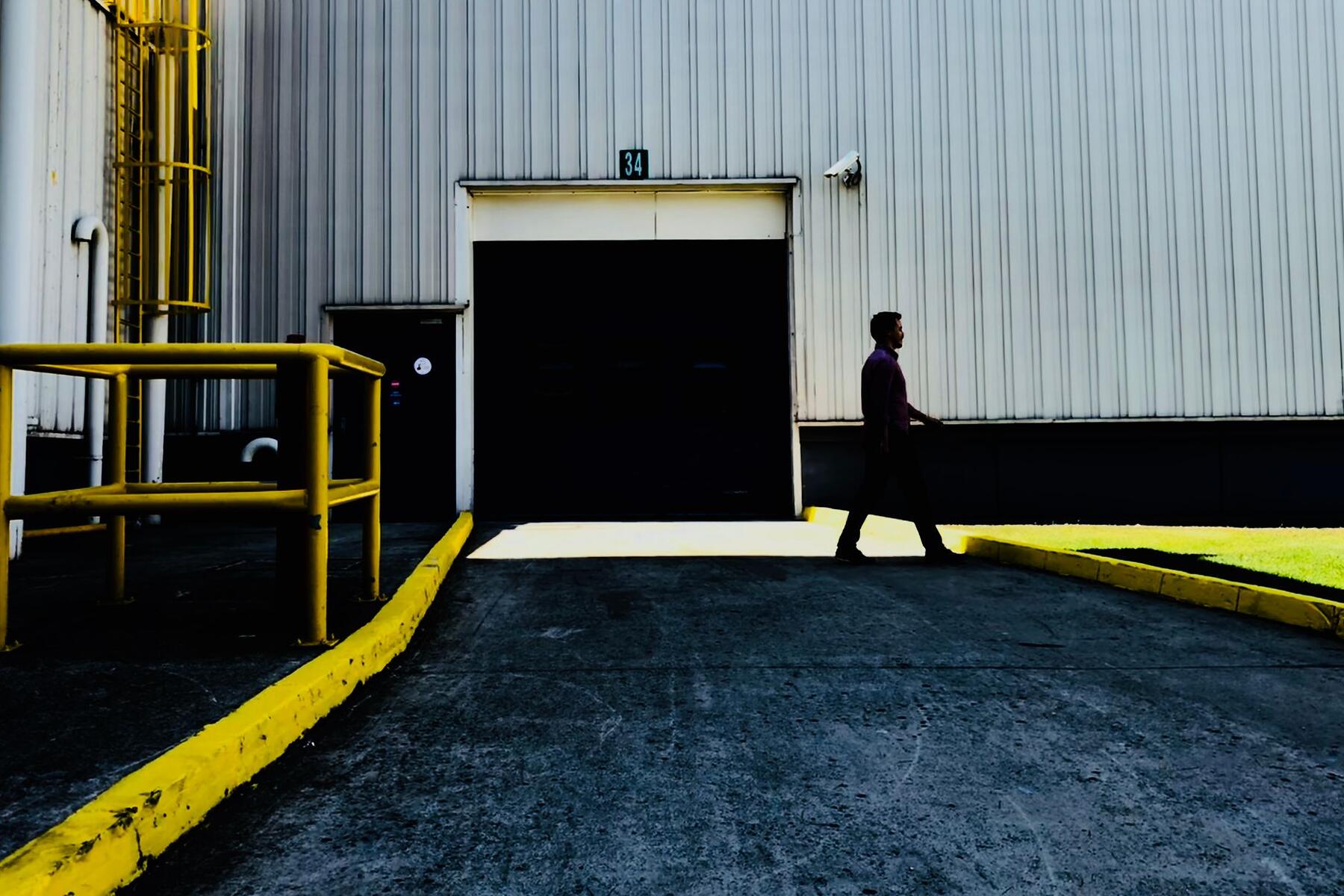
Commercial Rodent Control in Tampa, FL
Restaurants, warehouses, multifamily buildings and offices near the port and older waterfront get a per-site quote built on exclusion, trapping and a written record. Licensed contractors handle every job we route, and the first inspection is free.
- Per-site quotes, itemized
- Exclusion before any bait program
- FDACS business license for rodenticide
What commercial rodent control includes
A commercial rodent job starts with a free site inspection, moves to sealing the building envelope, then trapping or licensed baiting, and ends with a written record that a manager, a board or a health inspector can read.
The scope is wider than a house. A restaurant has a kitchen, a dry store, a dumpster corral and a back door propped open at 11pm. A warehouse has dock doors that seal badly, racking that hides runs, and pallets stacked against an exterior wall. A multifamily building has shared chases, a common roof and a dozen owners who each think the problem is someone else's. The inspection maps all of it before anyone quotes.
What the quote covers, line by line: the inspection and site map; exclusion of every opening on the roof, at the docks and at ground level; trapping inside, with the number of visits stated; licensed rodenticide in tamper-resistant exterior stations where the site calls for it; removal of any carcasses through dead rodent removal; and a documentation package. Ongoing monitoring is quoted as a separate line with its own price and its own end date, so the manager can see what the building is paying for month to month.
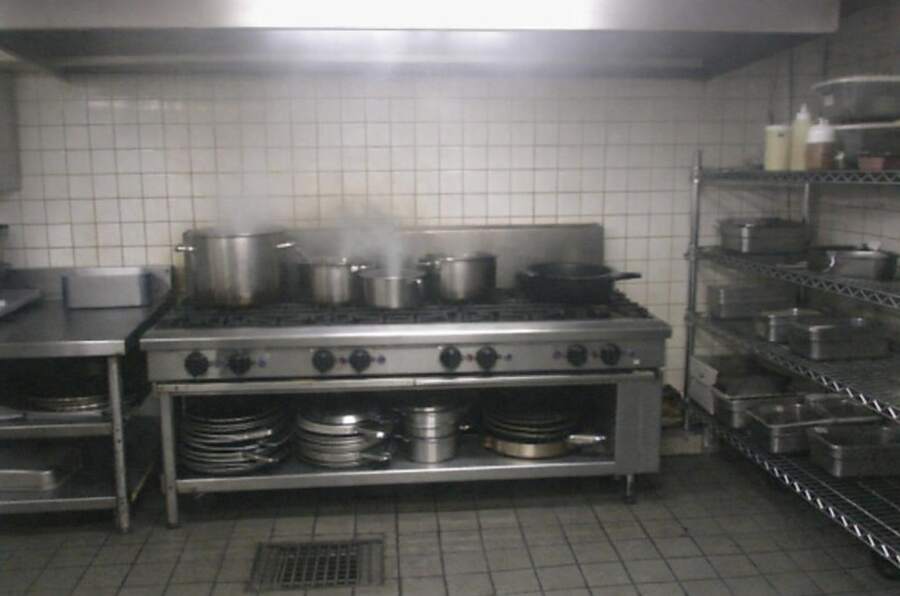
Signs of rodents in a commercial building
The usual commercial signs are droppings along walls and under racking, gnawed packaging in a dry store, grease rub marks on pipes and door frames, burrows in the ground beside a dumpster pad or dock, and staff reports of something moving after close.
- Droppings. Roof rat droppings run a quarter to half an inch, banana shaped with pointed ends, according to UF/IFAS. Fresh ones are dark and soft; old ones are gray and crumble. Along a kitchen wall, on top of a walk-in cooler and under the mop sink are the usual places.
- Rub marks. Rats run the same route nightly and leave a dark grease line on pipes, conduit, the top of a door frame and the edge of a dock plate.
- Gnawed stock. Bags of flour and rice, cardboard cases, and the corners of pallets. Wires are chewed too, and UF/IFAS notes rats chewing wiring can potentially start fires.
- Burrows. Norway rats dig. A hole two or three inches across in the ground beside a dumpster pad, under a dock ramp or along a slab edge near the water is theirs. Roof rats, the dominant Tampa species, are up in the ceiling grid and roof void instead.
- Staff reports. The dishwasher who sees something at close and the night crew at a warehouse are the first detection system a building has. A manager who logs what they say has the beginning of the record an inspector will ask for.
Restaurants, warehouses, multifamily and port-area offices
Each building type in Tampa has its own rodent pattern, and the quote follows the pattern.
Restaurants and commercial kitchens
Food, water and heat make a kitchen the strongest attractant in any strip. The entry points are the back door, the gap under it, the grease-trap and drain penetrations, the exhaust hood chase to the roof, and the dumpster corral thirty feet away. Roof rats reach the roof by the same routes they use on a house, along a branch or a wire, and come down through the hood chase. Norway rats come in at ground level from the corral. Sealing the kitchen means both.
Warehouses and distribution
A warehouse rodent problem is a door problem. Dock doors with worn bottom seals, brush seals with gaps at the corners, a man door propped for airflow, and the space under a dock leveler are the openings. Inside, racking hides runs and long aisles hide traps. The record for a warehouse is the site map with each door and each station numbered.
Multifamily and HOA buildings
An association-managed building has a common roof, shared plumbing chases and a dozen units that each hear the same rat. The entry point is nearly always on the roof or at a shared penetration, which usually makes it an association matter. A board needs a report that names the opening and its location so it can settle who pays; the clearance letter service is built for that.
Offices near the port and older waterfront
Norway rats burrow, and the older waterfront, the port area and the older commercial strips beside them are where Tampa's Norway rats live. They come in under slabs, through crawl spaces in older buildings and from burrows along seawalls and dumpster pads. An office in this zone gets a ground-level exclusion plan, and often a talk with the neighboring property, because a burrow across the fence line feeds the same population.
What is at stake at a health inspection
Food-service and lodging businesses in Florida are inspected by the state, and rodent evidence is among the findings an inspector writes up, so a rat problem in a kitchen is a licensing matter as well as a pest matter.
The specific consequences depend on what the inspector finds and on the rules in force at the time, and the operator's own regulator is the source for those. What holds in general is that droppings, gnawed stock, a live animal or a dead one in a food area are all findings, that a written pest-control record with dates and actions is what an operator is expected to be able to show, and that the fastest way out of a repeat finding is a building that has been sealed instead of a building that has been baited.
The health dimension is the reason. The CDC states that rodents carry many diseases, spread directly through contact with urine, droppings, saliva or a bite, and indirectly through fleas, ticks and mites that fed on an infected rodent. In a kitchen, that contact happens on a prep surface. The documentation package described below exists so the operator can put a dated record in front of an inspector instead of a verbal account.
Exclusion on commercial roofs, dock doors and dumpster pads
Exclusion on a commercial building means sealing every opening larger than a quarter inch in metal, and on a Tampa commercial site those openings are on the roof, at the dock doors and around the dumpster pad.
The UF/IFAS rat-proofing standard is the same as for a house: no opening larger than a quarter inch, closed with a material a rat cannot chew, which means steel mesh, sheet metal, mortar or concrete. Expanding foam does none of that. It fills a hole until a rat chews it, and a commercial quote built on foam is a quote for a return visit.
Roofs
Flat commercial roofs have HVAC curbs, exhaust hood chases, pipe boots, parapet scuppers and the joints where a wall meets the deck. Older strip centers with tile mansards have the same open eave course a tile-roofed house does, and the same fix: a code-approved metal bird stop, typically 26 gauge galvanized or aluminum, in place of whatever is missing. A roof rat is arboreal and comes to a roof along a tree, a fence or a wire, so the trees and lines touching the building get noted in the report too.
Dock doors and man doors
Every door gets a bottom seal with no daylight, a brush or rubber seal at the sides, and a threshold plate where the concrete has broken away. Dock levelers get a pit check. A man door that staff prop open gets a self-closer and a conversation with the manager, because no seal survives a door left open.
Dumpster pads and ground level
The corral gets a walk for burrows, and the burrows get filled after trapping, because a filled burrow with a live rat in it becomes a new burrow. Slab edges, utility penetrations, drain grates and the base of exterior walls are sealed to the same standard. Where the site borders a neighbor's harborage, the report says so.
Trapping compared with rodenticide on a commercial site
Trapping is the inside method and rodenticide, where used, belongs in tamper-resistant stations outside.
The EPA describes most rodenticides as anticoagulants with death four days to two weeks after feeding begins, and a rat that feeds at an exterior station and nests in a ceiling grid dies in the ceiling grid over the dining room. UF/IFAS states that trapping reduces the risk of a poisoned rat dying inside a building. On a commercial site the practical answer is trapping inside for the animals already present and, where the site needs an outside perimeter, licensed exterior bait stations that are numbered, logged and checked. Second-generation anticoagulants are withdrawn from consumer products, per the EPA, so exterior baiting on a commercial site is a licensed operator's job by law as well as by sense.
Documentation, monitoring programs and how to read a recurring-service quote
A commercial rodent record consists of a site map with every sealed opening and every station numbered, a log of each visit with findings and actions, and a summary a manager can hand to an inspector, and a monitoring program is the schedule of visits that keeps that log current.
The log is the part that survives. A visit entry states the date, who attended, which stations were checked, what was found in each, what was replaced or re-sealed, and what the manager was told to fix on the building side. Over months it shows whether the population is falling, which is the question an inspector, a landlord or a board asks.
Reading a recurring-service quote
The Reddit corpus on rodent work has one complaint that applies to commercial quotes more than any other: a removal price that includes a long monitoring contract without saying so. One thread describes a monthly charge with a bimonthly add-on stacked on top, and the homeowner could not tell what the removal itself had cost. A commercial manager signing for a whole building is exposed to the same thing at a larger scale.
A recurring quote should be read against four questions. What does the initial job cost, with exclusion, trapping and documentation as separate lines? What does each monitoring visit cost, and how many visits a year does the number assume? What does a visit include: station checks only, or a walk of the envelope and re-sealing where needed? And when does the contract end, and what does canceling cost? A quote that cannot answer those four is a quote to send back. Monitoring is a sensible product for a kitchen or a warehouse; it is a sensible product when it is priced on its own line with an end date.
What is the cheapest way to get rid of rats in a commercial building?
The cheapest commercial job over a year is a sealed building with a short trapping program, because everything else is a recurring charge for a problem that keeps arriving.
The corpus is clear on why. Trapping alone in an open building is described as harvesting rodents in traps; a monthly bait service in an open building is the same harvest at a monthly rate. Sealing costs more on day one and then costs nothing. A restaurant that pays for exclusion on the back door, the hood chase and the drain penetrations, plus two weeks of trapping and a filled burrow at the corral, has spent once. A restaurant that pays for stations and a monthly visit has spent every month, and still has the back door.
The exception is a site with harborage it cannot control, such as an office beside a seawall with Norway rat burrows on the neighbor's side of the fence, or a kitchen in a strip center where the shared roof void connects six tenants. There, a monitoring line earns its place, priced and dated on its own. The free inspection is where that call gets made, and the manager should ask the contractor to say in the quote which of the two cases the site is.
How many follow-up visits should a commercial quote include?
A commercial trapping program should state the number of return visits in the price, and a quote that leaves it open is the quote the corpus warns about.
Roof rats are wary of new objects, so UF/IFAS advises leaving traps at least a week, and a commercial site with a dozen traps across a kitchen ceiling and a dry store needs checking at least twice in that week. HomeGuide puts a small trapping job at two to three days and a severe infestation at one to two months, so a quote for a warehouse with burrows at the dock and runs in the racking should assume several rounds and say so. The two numbers to see on the quote are the visits included in the initial program and the price of a visit beyond that.
The follow-up that matters most is the one after sealing. Every sealed point gets checked for fresh gnawing at the next visit, because a rat that has been coming through a dock door seal for a year will test the new seal on the first night. That check is part of the exclusion line and should be listed there.
What commercial rodent control costs in Tampa
Commercial work is quoted per site after the free inspection, and the residential bands below are the floor: a commercial site starts where a house ends and rises with square footage, door count, roof complexity and the documentation the operator needs.
| Item | Residential band (floor for a commercial quote) | Source |
|---|---|---|
| Site inspection | Free; standalone inspection band $0 to $175 | HomeGuide 2026, national |
| Trapping and removal | $441 to $1,716 per visit typical, $1,078 average | Angi, Tampa |
| Exclusion sealing | $550 to $1,642 | Angi, Tampa |
| Full-building exclusion, larger structures | $500 to $2,500 and up | HomeGuide 2026, national |
| Dead rodent removal | $150 to $500 | HomeGuide 2026, national |
| Cleanup and decontamination | $600 to $2,500 | HomeGuide 2026, national |
| Monitoring program | Quoted per visit, own line, stated end date | Per-site quote |
What moves a commercial number above the floor: the number of dock and man doors, the number of roof penetrations, whether the roof is tile with open eave courses, the presence of burrows, the number of traps and stations a floor plan needs, after-hours access for a kitchen, and the documentation package. A restaurant of a few thousand square feet with three ground-level openings and a hood chase sits near the top of the residential exclusion band. A warehouse with ten dock doors is a different quote, and the inspection is what produces it.
Tampa commercial buildings and the licenses the work needs
Tampa's commercial rodent pressure splits by species and by zone: roof rats on every building with a tree, a wire or a tile mansard, and Norway rats at ground level around the port, the older waterfront and any dumpster pad with soil beside it.
The roof rat is the dominant structure invader in Hillsborough County, and it treats a strip center under live oaks the way it treats a bungalow in Seminole Heights. Restaurants and offices in the older districts, along the canopy streets of Hyde Park and South Tampa, get the roofline treatment. Norway rats, the burrowers, are the port and waterfront species, and a warehouse or office in that zone gets the ground-level plan. House mice are a distant third in Tampa and are handled on the same visit without a story of their own.
Weather sets the calendar. Outdoor activity runs high from May to October, summer rains from June to September push animals indoors, and attic and ceiling-void calls peak from November to February. After Helene and Milton in 2024, Tampa Bay pest firms reported a surge in calls as damaged roofs and soffits opened entry points, flooding displaced rats and debris piles became harborage. A commercial building that took storm damage should have its envelope checked before the roofer's tarp comes off; see post-storm rodent inspection.
Licensing is where commercial work differs most from a house. Trapping rats in, on or under a structure for hire requires at minimum an FDACS Limited Commercial Wildlife Management certificate. Applying rodenticide, which most commercial perimeter programs involve, requires an FDACS Commercial Structural Pest Control business license with a certified operator in General Household Pest and Rodent Control. FWC does not license rat and mouse trappers. Every contractor we route holds the FDACS credential the job needs, and a manager should confirm that license through the FDACS lookup before work starts, and keep the number in the pest file.
What to check on the contractor before signing a commercial contract
Confirm the FDACS business license and certified operator for any program that uses bait, get an itemized quote with monitoring on its own line, ask about warranty terms on the sealing, and get the number of follow-up visits in writing.
- License. A trapping-only program needs at minimum the FDACS Limited Commercial Wildlife Management certificate. A program with rodenticide needs the FDACS Commercial Structural Pest Control business license with a certified operator. Check the number through the FDACS lookup and ask which one the contractor holds.
- Itemized quote. Inspection, exclusion, trapping, bait stations, documentation and monitoring as separate lines, with the monitoring line carrying a per-visit price, a visit count and an end date.
- Warranty terms. Ask what the contractor's warranty on the sealing covers, how long it runs, whether it renews and what a callback costs. Get it on the quote.
- Follow-up visits. Ask how many are included and what one costs beyond that.
- Documentation. Ask for a sample visit log and site map before signing, so the format the inspector will see is the format the operator agrees to.
- Access and hours. A kitchen job runs after close; confirm the contractor will attend at those hours and that the quote reflects it.
How a job is arranged is described on the about page, and a manager can reach the line through the contact page. Someone answers 24 hours a day.
Services that usually go with this one
Most jobs in Tampa run as a sequence, and these are the pages that describe the steps around this one.
- Rodent Exclusion: Closing the roofline: soffit returns, vents, tile eaves and penetrations, to the quarter-inch standard.
- Rodent Clearance Letters: A written inspection report for closings, rentals, HOA disputes and insurance files.
- Dead Rodent Removal: Finding and removing the carcass behind the odor, then closing the opening.
Questions about how the pieces fit together are answered on the about page, or by phone at any hour.
Pest control in a food premises
The standard a commercial kitchen is held to.
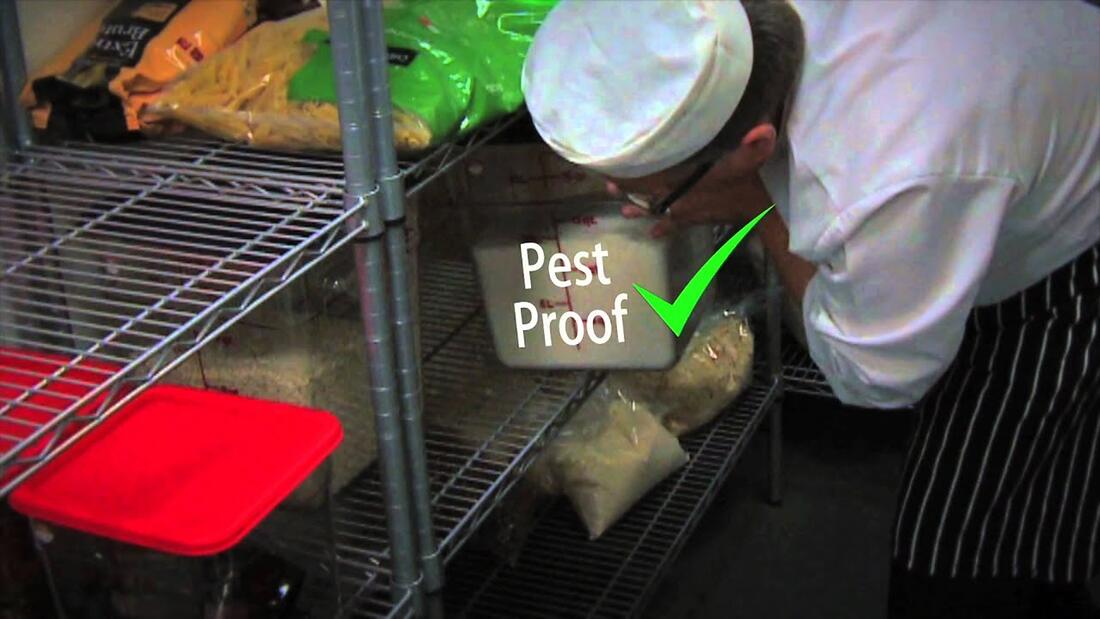
Video: Food safety coaching: pest control, from Food Standards Agency.
How a commercial rodent job runs
The sequence is the same as for a house, with the building envelope, the documentation and the visit count scaled to the site.
-
Site inspection and map
The contractor walks the roof, every door, the dumpster pad, the ground perimeter and the interior, and produces a site map with each opening and each proposed trap or station numbered. The inspection is free.
-
Exclusion
Every opening larger than a quarter inch is closed in steel mesh, sheet metal, mortar or a metal bird stop; door seals and thresholds are replaced; burrows are marked for filling after trapping.
-
Trapping inside, licensed stations outside
Traps go in on the sealing visit and stay at least a week with a stated number of checks. Where the site needs an exterior perimeter, a certified operator places numbered tamper-resistant stations.
-
Re-check and burrow fill
Every seal is checked for fresh gnawing, traps are pulled or reset, and ground burrows are filled once activity stops.
-
Documentation and monitoring
The operator receives the site map, the visit log and a summary. Ongoing monitoring, if the site needs it, is quoted on its own line with a per-visit price and an end date.
What to expect
The visit runs in the same order on every commercial rodent control job, so you know what is coming before the truck arrives.
- Site map with numbered openings and stations
- After-hours attendance for kitchens
- Sealing in metal, foam is refused
- Visit count stated on the quote
- Written log after every visit
Why Tampa operators route commercial work here
The right FDACS license for the program
A bait program on a commercial site is legal only under an FDACS Commercial Structural Pest Control business license with a certified operator in General Household Pest and Rodent Control, and a trapping program needs at minimum the Limited Commercial Wildlife Management certificate. Every contractor we route holds the credential the program needs, and the number goes in the pest file for the inspector to see.
FDACS Commercial Structural Pest Control business license with a certified operator, verifiable through the FDACS lookup
Monitoring on its own line, with an end date
The commercial quote separates the initial job from any recurring service, states the per-visit price, the visit count and the contract end, and says what a visit includes. A manager can see what the building is paying for and can cancel without a surprise. That structure comes from the most common complaint in the customer threads about this trade: a removal price that hid a long monitoring contract.
Angi Tampa exclusion band $550 to $1,642, quoted as the floor for a per-site commercial figure
Sealing to the quarter-inch standard at every door and penetration
Dock doors, man doors, hood chases, pipe boots, HVAC curbs, tile mansard eaves and slab edges are closed in metal to the UF/IFAS rat-proofing standard, and every sealed point is numbered on the site map and checked for fresh gnawing at the next visit. Foam is refused as a sealing material because it is a return visit waiting to happen.
UF/IFAS rat-proofing standard: no opening larger than a quarter inch
What Reddit Says About Commercial Rodent Control in Tampa
The rodent threads are mostly homeowners, and the vetting advice they give each other transfers to a manager signing for a building. Get more than one bid for the same written scope, because a single figure cannot be judged. Insist the quote is itemized into inspection, trapping, exclusion, cleanup and any ongoing plan. Prefer a local operator who does the sealing and repair work over a brand that only sets traps and bait, and ask that question directly.
The red flag that matters most on a commercial quote is the bundled contract. One thread describes a monthly charge with a bimonthly add-on folded into the removal price, and the person could not work out what the removal alone had cost. The threads also warn about poison-only plans with no sealing, about the claim that poison makes rats go outside to die, and about companies that keep coming back for months with nothing changing. Trapping with no sealing gets described as harvesting rodents in traps, which is what an unsealed building on a monthly plan is doing.
The questions they tell each other to ask: what exactly is included and what is a separate line item; whether the exclusion is warrantied and whether the warranty renews; whether cleanup is included or only trapping; how many follow-up visits the price includes; and what happens if the rats come back. Timelines are the other theme, with two months common and four months without resolution appearing, so a manager should expect the contractor to state a timeline in the quote.
A commercial quote that answers those questions on paper, with monitoring on its own line, is the one the threads would tell a manager to sign.
A typical commercial rodent call in Tampa
The situation: The manager of a restaurant in a strip center under mature oaks calls after the closing crew finds droppings on top of the walk-in cooler two nights running and a bag of rice chewed open in the dry store. A health inspection is due, the back door has been propped open at close for years, and the dumpster corral shares a fence with a vacant lot.
What gets done: The contractor we route inspects after close and maps three openings: the gap under the back door, the exhaust hood chase where it meets the roof deck, and a burrow beside the dumpster pad. The roof is reached by an oak limb resting on the parapet. The back door gets a new bottom seal and a self-closer, the hood chase is collared in sheet metal, and the drain penetrations under the mop sink are sealed in mortar. Traps go across the ceiling grid over the kitchen and in the dry store, with three checks in the first week. A numbered exterior station is placed at the corral by a certified operator. The quote lists inspection, exclusion, trapping and documentation as four lines, with a monitoring option priced per visit on a fifth line the manager can decline.
How it turns out: Trapping stops producing after the second week, the burrow is filled, and the seals show no fresh gnawing. The manager gets a site map, the visit log and a one-page summary for the pest file, and is told to have the oak limb cut back off the parapet and to keep the back door closed at close. The manager takes the monitoring line at a quarterly visit rate because the vacant lot next door is outside anyone's control, and the contract shows its end date.
Commercial rodent control questions
What restaurant operators, warehouse managers and board members ask before a site is quoted.
Scope and documentation
What records will I be able to show a health inspector?
A site map with every sealed opening and every trap or station numbered, a log of each visit stating the date, the attending contractor, what was found at each station and what was done, and a summary sheet with the contractor's FDACS license number. The log builds over time, so an inspector can see the population falling and the building being sealed. What a given inspector requires depends on the rules in force, and the operator's own regulator is the source for those; the record is built to answer the questions those rules tend to ask.
Is the roof a unit owner's problem or the association's in a condo building?
The report describes where the opening is, and the association's documents decide who pays. In practice an opening on the common roof or in a shared plumbing chase is an association matter and an opening inside the unit boundary is an owner matter, and most Tampa multifamily rodent entries are on the roof or at a shared penetration. A board asking for a finding it can act on should ask for the written report and, once the building is sealed and re-inspected, the clearance letter that names the sealed openings.
Do you use poison in a kitchen?
Trapping is the method inside a kitchen, and rodenticide, where a site needs an exterior perimeter, goes in numbered tamper-resistant stations outside placed by a certified operator under an FDACS business license. The EPA describes most rodenticides as anticoagulants with death four days to two weeks after feeding begins, and a rat that feeds outside and nests in the ceiling grid dies over the dining room. UF/IFAS notes trapping cuts the risk of a poisoned animal dying inside a building. That is why the inside work is traps.
Pricing and contracts
Why is there no commercial price list?
Because a restaurant with three openings and a warehouse with ten dock doors are different jobs, and a single figure would be wrong for one of them. The residential bands are published as a floor: Angi puts a Tampa rodent visit at $441 to $1,716 and Tampa exclusion at $550 to $1,642, and a commercial site starts there and rises with doors, roof penetrations, station count, after-hours access and documentation. The free inspection produces the per-site quote, itemized, with monitoring on its own line.
Do I have to sign a monthly contract?
No. The initial job is quoted on its own, and monitoring is a separate line with a per-visit price, a visit count and an end date that the operator can decline or cancel. Monitoring earns its place on a site with harborage nobody controls, such as a seawall with Norway rat burrows on the neighbor's side or a strip center with a roof void shared by six tenants. On a building that has been sealed and re-checked, it is optional, and the quote says which case the site is.
Still have a question? Call (813) 710-4931 and ask.

Book a free site inspection
Call (813) 710-4931 with the address and the building type, and the inspection gets arranged around your hours. Someone answers 24 hours a day.