
Roof Rat Removal in Tampa, FL
Scratching over the bedroom ceiling after dark in Tampa is almost always a roof rat that came in along an oak limb or a palm and found a gap at the roofline. Licensed contractors handle every job we route, sealing first and trapping second.
- Free attic and roofline inspection
- Answered 24 hours a day
- FDACS-licensed contractors on every job
What roof rat removal in Tampa includes
Roof rat removal in Tampa is a sequence: a free inspection of the roofline and attic, sealing of every opening found, a trapping program inside the attic, and a follow-up visit before the job is closed. Each part sits on its own line of the quote so you can see what you are paying for and what you can decline.
The animal dictates the order. A roof rat climbs, enters at the top of the house and nests in the attic, so trapping on its own leaves the doorway open for the next one. The contractor we route seals first and traps second, or runs both in the same visit, then comes back to confirm the attic has gone quiet.
- Roofline and attic inspection at no charge, with written findings (see rodent inspection)
- Exclusion with galvanized hardware cloth, sheet metal and tile eave closures at soffit returns, gable and off-ridge vents, ridge ends and utility penetrations (see rodent exclusion)
- A snap-trap program in the attic, checked on a schedule, with every carcass removed
- A verification visit to look for fresh droppings, new gnawing and new sound
- Optional attic cleanup, insulation replacement and dead-rodent removal, each quoted separately
Sleep is usually the first casualty once the noise starts over the bedroom, and people who have been told they are overreacting tend to under-report what they hear. Say exactly what you heard, where, and at what hour. It decides where the traps go.
Work out roughly what this job costs in Tampa
Six questions, using the published Tampa and national cost bands further down the page. The range is wide on purpose: the roofline is the biggest variable and nobody can price one from a form.
Bands come from Angi's Tampa cost pages and HomeGuide's 2026 national guides. Every figure is confirmed at the free inspection.
Roof rat, Norway rat, house mouse or squirrel
The roof rat is the animal in almost every Tampa attic call, and a handful of field marks separate it from the Norway rat, the house mouse and the gray squirrel that share the same trees. UF/IFAS puts an adult roof rat at 12 to 14 inches including the tail, with a tail longer than the head and body together. Tampa knows it as the citrus rat or the palm rat.
| Animal | Where it turns up in Tampa | What to look for | When you hear it |
|---|---|---|---|
| Roof rat | Attics, oak canopy, palms, citrus trees, fence tops and service wires | Slender body, 12 to 14 inches nose to tail tip, tail longer than head and body; droppings a quarter to half inch, banana shaped with pointed ends (UF/IFAS) | After dark, light and fast across the ceiling |
| Norway rat | Burrows, under slabs, around dumpsters, the port and older waterfront blocks | Heavier ground rat; found at grade level, rarely in a Tampa attic | After dark, at ground level and in garages |
| House mouse | Kitchens, garages, wall voids; a distant third in Hillsborough County | Small and generic; droppings far smaller than a roof rat's | Inside walls and cabinets, mostly at night |
| Gray squirrel | Gable vents, soffits, the same oak limbs | Bushy tail; chewed vent screens at the gable end | Daylight, especially early morning, heavier footfalls |
Droppings settle most arguments. A quarter to half inch long, curved like a small banana and pointed at both ends is the roof rat signature that UF/IFAS describes, and it is the one dropping measurement in this niche that has a source behind it. Anything much smaller points toward a mouse. Anything heard at ten in the morning points toward a squirrel. When two contractors disagree over a juvenile roof rat versus a mouse, which happens, the tail length and the shape of the droppings decide it.
Signs of roof rats in a Tampa attic
Fresh droppings along the attic joists, a scamper across the ceiling after the house goes quiet, and hollowed oranges under the backyard tree are the three signs that put Tampa homeowners on the phone. One of them alone is enough to book the inspection.
- Scratching, scampering or a rolling sound overhead between dusk and dawn
- Droppings on top of the insulation, along the top plate or on the garage floor under the attic hatch
- Gnaw marks on soffit edges, vent screens, AC line-set insulation or wiring
- Dark rub marks along a rafter or the edge of a hole, left by an oily coat on a repeated route
- Insulation pushed into runs and hollows, or pulled toward a warm spot near the air handler
- A musky odor at the attic hatch or in a closet under the attic
- Oranges, grapefruit or tangerines on the ground with a clean round hole and the inside gone
Citrus season is when many Tampa infestations get found. From September through March the dooryard fruit ripens, and a rat that has been living in the attic for months starts leaving hollowed oranges under the tree. The fruit changes what you can see; the population was already there. The other detection window is the run of cool snaps from November to February, when attic calls in Tampa peak because the animals move in and stay in. Summer rains from June to September push them indoors as well.
How roof rats reach a Tampa roofline
Roof rats get onto a Tampa roof from the trees, and they get into the attic through openings a quarter inch and larger. UF/IFAS describes the species as arboreal, moving along branches, wires and palm trunks, and ranging roughly 150 yards from the den, so the oak two doors down and the fruit tree across the street are both inside its territory.
In Seminole Heights, Tampa Heights, Hyde Park and South Tampa the live oaks and Spanish moss lie on the shingles, which turns the roof into an extension of the tree. Palms do the same job in every district: the skirt of dead fronds is a nest site and the trunk is a ladder. Once on the roof, the animal tests the same list of weak points on almost every vented Florida attic.
- Soffit returns where the soffit meets the fascia or a wall, and aluminum soffit panels that have been pushed up
- Gable vents with a plastic or light-wire screen that has been chewed or has rusted out
- Ridge vents and off-ridge vents with plastic mesh underneath
- The open ends of barrel and concrete tile courses at the eave, especially where the bird stop is missing or displaced
- Penetrations for the AC line set, cable, the electrical mast and plumbing vents
- The garage door seal and the gap above a garage-to-attic access panel
A quarter of an inch is the number that matters. UF/IFAS gives that as the rat-proofing standard, because a mouse gets through a quarter-inch opening and a rat through a half-inch one, so the sealing has to be measured against the smaller figure. Sealing is its own service with its own page under rodent exclusion; the neighborhood pages for Seminole Heights and South Tampa cover the canopy in more detail.
What is the cheapest way to get rid of rats?
The cheapest plan that holds is sealing the roofline and trapping what is already inside, because every cheaper option gets paid for twice. Poison-only bait is the lowest first quote in most Tampa markets and the most expensive by the time the second and third visits are added and a carcass is somewhere in a wall.
| Approach | What it does | Where it fails |
|---|---|---|
| Bait stations only | Kills some of the current animals over days to weeks | Nothing is sealed, so the attic refills; poisoned rats die inside the structure |
| Trapping only | Removes the current animals from the attic | The doorway stays open; homeowner threads call this harvesting rodents in traps |
| Sealing only | Closes the entry points | Animals already inside are locked in and chew a new way out, often into the living space |
| Sealing plus trapping | Closes the openings, removes what is inside, then verifies | Costs more up front; usually ends the problem in one program |
The poison question deserves a straight answer because it is how bait-only plans get sold. The EPA describes most rodenticides as anticoagulants, and says death typically comes four days to two weeks after the animal starts feeding. A rat that feeds in your attic and nests in your attic dies in your attic. The line about poison making rats thirsty so they go outside to die is folklore. UF/IFAS makes the practical point that trapping cuts the risk of a poisoned rat dying inside the building. The EPA has also withdrawn second-generation anticoagulants from consumer products, so any bait beyond the hardware-store tier is a licensed-operator product with label rules on placement.
Foam is the other false economy. A blob of expanding foam in a soffit gap is chewed out in a night; quarter-inch galvanized hardware cloth, sheet metal and a proper tile eave closure are what stay put. The material comparison is laid out on the exclusion page.
How long does it take to get rid of rats?
A light infestation with the roofline sealed is usually over in days, and a heavy one takes one to two months. HomeGuide puts trapping a small number of animals at two to three days and a severe infestation at one to two months, and the Tampa jobs that run longer are almost always the ones where nothing was sealed.
Two facts from UF/IFAS explain the timeline. First, roof rats are wary of new objects, so traps should stay in place at least a week before anyone decides they are in the wrong spot. Second, the species breeds fast: sexually mature at three to four months, a gestation of 21 to 23 days, litters of five to eight, and four or five litters in a year. A pair that gets a season in a Tampa attic is a colony by the time the citrus ripens, which is why the inspection is worth booking on the first night of noise.
Homeowner threads are full of two-month and four-month timelines with no resolution, and the common element in those stories is a company returning to reset bait with no sealing on the invoice. Ask on the first visit what has been sealed, and read the about page for what the routed contractors are expected to put in writing.
What roof rat removal costs in Tampa
A typical Tampa rodent removal visit averages about $1,078 in Angi's Tampa cost data, with most jobs falling between $441 and $1,716, and exclusion sealing in Tampa runs $550 to $1,642 on top. These are typical-job bands; the free inspection produces the real figure, itemized.
| Line item | Tampa (Angi) | National (HomeGuide 2026) |
|---|---|---|
| Trapping and removal | $441 to $1,716 per visit, average $1,078 | $250 to $1,200 |
| Exclusion (full-home sealing) | $550 to $1,642 | $500 to $2,500 |
| Attic cleanup and insulation | Insulation removal $600 to $1,200; replacement adds $1,000 to $3,000 | Cleanup and decontamination $600 to $2,500; insulation removal and replacement $2.50 to $5.50 per sq ft |
| Dead rodent removal | Quoted at inspection | $150 to $500 |
| Standalone inspection | Free here | $0 to $175 |
Four things move a Tampa roof rat quote inside those bands: the length of roofline and the number of openings, a tile roof versus shingle (tile eaves take longer to close properly), how long the animals have been in the attic, and whether the insulation has to come out. The national guides also price crawl-space and basement work that most Tampa houses cannot have, since the stock is slab-on-grade, so a Tampa quote can land under the national spread for the same scope. Bundled monthly plans are a separate question; ask whether a monitoring contract is folded into the number.
Tampa houses, Tampa seasons and the roof rat
Tampa is roof rat territory because of what grows here and how the houses are built: year-round breeding weather, mature oaks and palms against the rooflines, and vented attics on slab foundations that put every entry point at the top of the house. The pre-war and mid-century districts carry the most pressure, and the newer block subdivisions still lose the fight at the soffit and the ridge.
The oak-canopy districts
Seminole Heights, Tampa Heights, Hyde Park and South Tampa down to Ballast Point are where roof rat calls cluster. The Seminole Heights historic district was built between 1912 and 1928, Old Seminole Heights has a median build year of 1965 with about 30 percent of homes from before 1950, and the Craftsman bungalows and cracker houses there sit under live oaks with Spanish moss on the eaves. Older soffits, older vent screens, more limbs touching the roof.
Tile roofs and vented attics
Newer and higher-end stock in New Tampa, Westchase and Riverview runs to barrel and concrete tile over block and stucco, with lower canopy pressure and the same soffit, gable, ridge and off-ridge vents. On a tile roof the gap under the first course at the eave is a named component with a named closure, the bird stop, and a missing or corroded one leaves a rat-sized void along the whole eave. The Department of Energy lists installing bird stopping among its recommended tile-roof measures.
Storm season
After Helene and Milton in the fall of 2024, and after Ian and Irma before them, Tampa Bay pest firms reported a surge in rodent calls as wind opened soffits and roofs, surge displaced rats from the ground, and debris piles became harborage. The CDC links leptospirosis case increases to hurricanes and floods, names rodents among the reservoirs, and recommends rodent control as post-flood prevention. The Department of Energy documents storms breaking and displacing roof tiles. A post-storm rodent inspection exists for that window.
Who is allowed to do the work
In Florida, trapping rats in, on or under a structure for hire calls for an FDACS Limited Commercial Wildlife Management certificate as the floor. Going further, into rodenticide or general pest work, takes an FDACS Commercial Structural Pest Control business license held by a certified operator in General Household Pest and Rodent Control. Rat and mouse trappers are not licensed by FWC. Whoever attends carries the FDACS credential the work requires, and the number is checkable in the FDACS license lookup before anything starts.
What to check before a roof rat contractor starts
Five checks separate a roof rat job that ends from one that drags on: the FDACS license number, an itemized quote, a sealing line on that quote, written warranty terms on the sealing, and a stated number of follow-up visits. Whoever attends should be able to answer all five on the first visit.
- Confirm the license through the FDACS lookup: a Limited Commercial Wildlife Management certificate for trapping, or a pest control business license with a certified operator if bait will be used.
- Ask for the quote in separate lines: inspection, exclusion, trapping, cleanup, any ongoing plan. A single bundled number cannot be compared with another bid.
- Ask what will be sealed, with what material, and where. Foam or steel wool on its own is a red flag.
- Ask how long the exclusion is warrantied, whether the warranty renews or ends, and what happens if they come back.
- Ask how many return visits are included and who removes the trapped animals.
Bring the same list to every bid you collect, and use the contact page if you want the questions answered before anyone comes out.
Services that usually go with this one
Most jobs in Tampa run as a sequence, and these are the pages that describe the steps around this one.
- Rodent Exclusion: Closing the roofline: soffit returns, vents, tile eaves and penetrations, to the quarter-inch standard.
- Rodent Inspection: A free walk of the roofline, attic and exterior that sets the sequence for the job.
- Attic Cleanup and Decontamination: Removing droppings and contaminated insulation, then sanitizing the attic.
Questions about how the pieces fit together are answered on the about page, or by phone at any hour.
Roof rats and sewer rats
Where each one comes from, and what stops it.
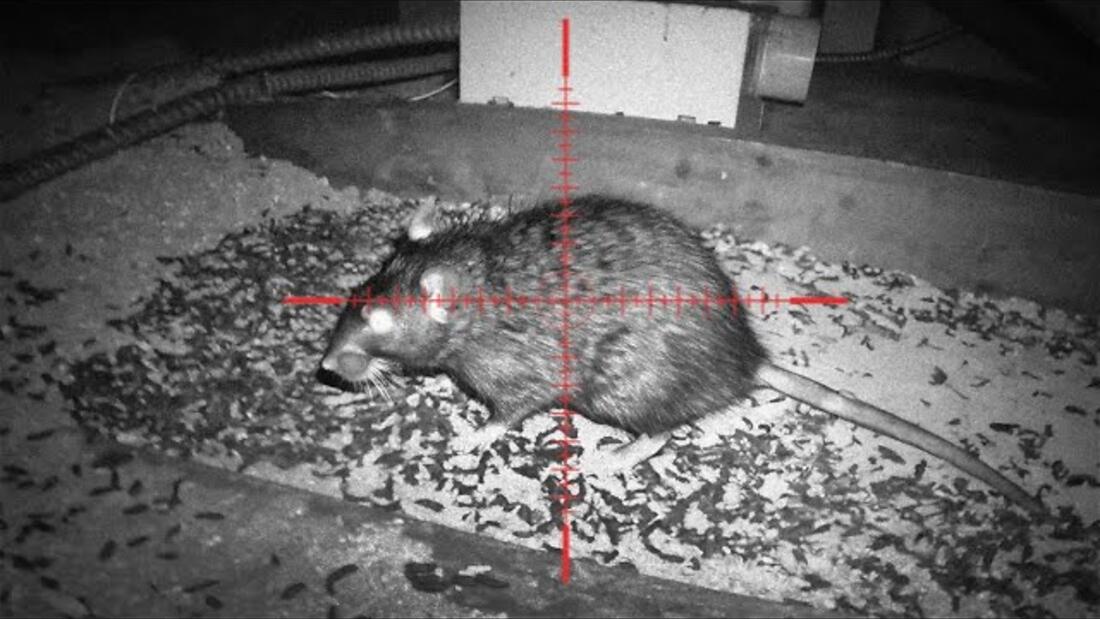
Video: The fastest way to get rid of roof and sewer rats, from Twin Home Experts.
How a roof rat job runs in Tampa
Sealing is the spine of the job; trapping, verification and cleanup hang off it.
-
Free inspection
Whoever attends walks the roofline from a ladder, checks the attic with a light, and writes down every opening, every dropping run and every chewed spot. You get the findings and a quote in separate lines.
-
Exclusion at the roofline
Every opening a quarter inch or larger is closed with galvanized hardware cloth, sheet metal or a proper tile eave closure. This step is what stops the next rat.
-
Trapping in the attic
Snap traps go on the runs the droppings mark and stay at least a week, because roof rats are wary of new objects. They are checked on a schedule and every carcass is removed.
-
Verification visit
A return visit looks for fresh droppings, new gnawing and new sound. Any opening that was missed gets sealed then.
-
Cleanup and restoration if wanted
Contaminated insulation, dead-rodent odor and chewed wiring are quoted as separate work once the attic is clear.

What to expect
The visit runs in the same order on every roof rat removal job, so you know what is coming before the truck arrives.
- A ladder on the roofline and a light in the attic
- Openings measured against a quarter inch
- Traps set on marked runs and left a week or more
- A written list of what was sealed and where
- Trapped animals removed at every check
Why Tampa homeowners route roof rat work through us
Sealed before it is trapped
The contractor we route closes the roofline before or alongside the trapping, because a Tampa attic with an open soffit return refills from the oak canopy within weeks. Openings are measured against the quarter-inch standard and closed with galvanized hardware cloth, sheet metal and tile eave closures, and the list of what was sealed goes on paper. Trapping without sealing is the single most criticized practice in homeowner forums, and it is the one thing every routed job is built to avoid.
UF/IFAS: a quarter inch is the rat-proofing standard
Free inspection and an itemized quote
The inspection costs nothing and the quote that follows is split into inspection, exclusion, trapping, cleanup and any ongoing plan, so you can put it beside another bid and compare like with like. National cost guides price a standalone rodent inspection at up to $175, and homeowners in forums describe paying around $75 just to get a bid. Here the number you pay to find out what is wrong is zero.
HomeGuide 2026: standalone rodent inspection $0 to $175 nationally
FDACS credential on every routed contractor
Trapping rats in a structure for hire in Florida is regulated by FDACS, and every contractor we route holds the credential the job needs: a Limited Commercial Wildlife Management certificate at minimum, or a pest control business license with a certified operator where rodenticide is involved. The license number is checkable in the FDACS lookup before anyone climbs the ladder, and you are encouraged to check it.
FDACS Limited Commercial Wildlife Management certificate, verifiable in the FDACS license lookup
What Reddit Says About Roof Rat Removal in Tampa
Homeowners in the r/pestcontrol and r/HomeImprovement threads vet rat companies by collecting several bids for the same scope and refusing to read a single quote on its own. They want the number broken into trapping, sealing and cleanup, they prefer a local operator to a national brand, and they ask early whether the company does the repair work or only the trapping. The inspection fee is a sore point; paying around $75 to get a bid comes up often enough that a free inspection reads as a real advantage.
The red flags they warn each other about are consistent. Poison-only plans with no sealing top the list, and the line that poison makes rats thirsty so they run outside to die is treated as a tell for a dishonest operator. Quotes that fold a long monthly monitoring contract into the removal price draw the same reaction. So do companies that keep returning for months with nothing changing, and the two opposite mistakes: sealing with animals still inside, and trapping with nothing sealed, which one commenter describes as harvesting rodents.
The questions they tell each other to ask are short. What exactly is included, and what is a separate line? Is the sealing warrantied, and is the warranty renewable or a one-time term? Will you clean and decontaminate, or only trap? How many follow-up visits are included? What happens if they come back? Pricing anxiety runs through all of it, with quotes for similar work ranging from under two thousand dollars to tens of thousands and the recurring question being whether they are being taken advantage of.
The Florida threads add the local color: palm fronds and overhanging limbs as the roof rat highway, tree collars on tall palms, barrel-tile eaves and soffit gaps as the characteristic entry points, and an infestation traced to the aftermath of Irma. The emotional register is heavier than in most trade forums, with sleep loss and the feeling of being dismissed as dramatic coming up again and again.
Every contractor we route is expected to answer that list of questions on the first visit, in writing.
A typical roof rat call in South Tampa
The situation: A couple in a 1950s ranch house south of Gandy hear a light scamper over the primary bedroom around eleven each night through December. Friends tell them it is a squirrel. A live oak limb rests on the back roof slope, there is a grapefruit tree by the fence, and in January they notice fruit on the ground with a neat round hole and nothing inside. One of them has stopped sleeping through the night.
What gets done: Whoever attends finds droppings a quarter to half inch long along the top plate above the bedroom, a chewed soffit return where the limb meets the eave, and a gable vent screen with a hole worn through. The oak limb is noted for pruning. The soffit return and the gable vent get quarter-inch galvanized hardware cloth and a sheet-metal patch, the ridge vent ends are checked and closed, and snap traps go on the dropping run and stay a week. The quote lists exclusion, trapping and a follow-up as separate lines.
How it turns out: The traps take several adults in the first ten days and then go quiet. The return visit finds no fresh droppings and no new gnawing, the homeowners get a written list of what was sealed and where, and the grapefruit stays on the tree. Insulation replacement is quoted separately and declined for now.
Roof rat questions from Tampa homeowners
These are the questions that come up most on the phone and in homeowner threads.
Identifying the problem
How do I know if it is a rat or a mouse in the attic?
Measure the droppings. A roof rat leaves droppings a quarter to half an inch long, curved and pointed at both ends, according to UF/IFAS, and the animal itself runs 12 to 14 inches with a tail longer than its body. Mouse droppings are far smaller. In Tampa the odds favor the roof rat heavily, since house mice are a distant third in Hillsborough County and rarely nest in a hot vented attic. Daytime noise points to a squirrel instead. The free inspection settles it either way, and the species decides where the traps and the sealing go.
Should I be worried about hantavirus from the droppings?
Florida's identified hantavirus reservoir is the native cotton rat, an outdoor field species, and most US cases occur in the western states, so a Tampa attic with roof rats is a low hantavirus risk. The droppings still need respect. The CDC states that rodents carry many diseases spread directly through urine, droppings, saliva and bites, and indirectly through fleas, ticks and mites that fed on an infected animal. A respirator and gloves during cleanup are the right call on general contamination grounds, which is why attic cleanup is done as its own job.
Is one rat sighting a whole infestation?
One sighting in a Tampa attic usually means more than one animal, because the roof rat breeds through the year here. UF/IFAS gives sexual maturity at three to four months, a gestation of 21 to 23 days and litters of five to eight, four or five times a year. A single animal seen in November has likely had company since the summer rains. The inspection reads the droppings and rub marks to estimate how long the attic has been occupied, and that estimate shapes the trapping program.
Getting rid of them
Do I really need the chew-ins repaired now, or can I get away with trapping?
Repair them now, in the same program as the trapping. A roof rat that chewed through a soffit return has left a marked route with its own scent, and the next animal from the same oak canopy will use the same hole within weeks. Trapping without sealing is the pattern behind most of the multi-month timelines in homeowner threads. The sealing is the part of the job that ends it, and it is the part a warranty can attach to; ask about the terms before the work starts.
What keeps rats away permanently?
A closed building keeps them out, and nothing else does the same job. Every opening a quarter inch or larger at the roofline gets closed with galvanized hardware cloth, sheet metal or a tile eave closure, limbs and fronds get pruned back off the roof, and fallen fruit gets picked up in citrus season. Repellent devices and cats do not hold an attic against an animal that arrives from the tree line. A rat ranges about 150 yards from its den, per UF/IFAS, so the neighbor's tree can supply the food while your roof supplies the nest; the sealing is what settles it.
Will you use poison in my attic?
Trapping is the default for a Tampa attic, and the contractor we route explains the alternative before using it. The EPA describes most rodenticides as anticoagulants that kill four days to two weeks after feeding begins, so a rat baited in the attic tends to die in the attic or a wall, and UF/IFAS notes that trapping reduces that risk. Where bait is used, it is a licensed-operator product in a tamper-resistant station placed under the label rules, and applying it requires an FDACS pest control business license with a certified operator. Ask which approach is quoted and why.
Still have a question? Call (813) 710-4931 and ask.

Book a free roof rat inspection in Tampa
Call (813) 710-4931 or send the form. The line is answered 24 hours a day and the inspection costs nothing.